
Stained Glass
In a dim stone room, lead lines draw an arched window of a sun, a tree and hills, the glass fills in, and the sun comes out: colored light streams through the shafts and the window's projection slides and stretches across the stone floor as the afternoon moves.
Written and rendered by AI CSS Animations Oct 16, 2026
- Type
- prompt
- Made with
- Claude Opus 5.5 in Claude Code
- Built in
- Canvas
- Topics
- Shapes
About this style
Stained glass windows are made from pieces of colored glass held in H-section strips of lead called cames, often with details painted in enamel and fired. The craft reached a high point in medieval European cathedrals such as Chartres, whose windows fill the interior with colored light, and was revived in the 19th century by the Gothic Revival and the Arts and Crafts movement. Its heavy lead lines and jewel colors remain a reference for illustration, game art and logo design.
The prompt
Make a 10-second stained-glass animation: lead lines draw, the panes fill, the sun comes out, and the window's colors slide across a stone floor as the sun moves.

<inputs>
Studio: Hollin Glass Works. Line: "Light, held in lead." Detail: Open studio · Saturdays 10–4. Window: a round-arched window of a sun rising behind a tree over three hills, inside a border of alternating ruby and straw panes. Duration: 10s. If I don't give you something, use the default and don't ask.
</inputs>

<direction>
Scene: a dim stone interior seen straight on, wall above and floor below. Pinhole camera: eye 1.7m above the floor, 10m from the wall, focal length 1500px, principal point (960, 420). The wall meets the floor at y 675. The window is 2.6m wide and 3.6m tall with a semicircular head, sill 0.6m up, spanning x 565–955, y 45–585.
Wall: ashlar blocks about 0.5 × 0.3m, #2B2521 to #3B332C, ±6% per block, 2px mortar #1D1916, fine seeded noise. Floor: 0.8m stone flags in perspective, #3E362F with #26211D seams and a faint worn sheen.
Glass: about 40 panes as a planar subdivision (neighbors share edges): a 22px ruby and straw border following the arch, a cobalt #1F4FB5 and sky #5E9BD8 sky, an amber #E3961B sun with straw #F1DE9C rays in the arch, a tree with an emerald #1E8A4C canopy split into six panes, hills in olive #6E8B2A, emerald and violet #6A3E9E, and ruby #B11F2C in the border. Each pane gets seeded streaks along one direction (±10% lightness) and a few seed bubbles. Unlit glass shows 25% of its color; lit glass glows at full color with a soft 6px bloom inside the window.
Lead: 8px came #18181A along every shared edge with a 1px #3A3A3E top highlight; two 4px iron saddle bars cross the window.
Light: the sun is a direction d (into the room, downward). Its elevation falls 46° → 38° and its azimuth swings from 12° left to 18° right of the wall normal. Project each pane onto the floor (window point + d·(height ÷ −d.y)), then through the camera: an inverted, stretched copy of the window whose top lands nearest the viewer. Draw the projections to an offscreen canvas with ctx.filter blur(9px) and composite with 'screen' at 60% on the floor. Shafts: faint quads from each pane to its floor patch, additive at 5–8%, fading toward the floor. 160 seeded dust motes drift under 6px/s and show only inside the shafts. While lit, a warm glow (≤20%) spreads on the wall around the window.
Type, on the wall at x 1300–1800, y 170–400, ivory #EFE6D4: Spectral SC 500, 56px, tracking 0.06em, for the studio; Spectral 300 italic, 34px, for the line; Spectral 400, 22px, tracking 0.08em, for the detail.
Motion is calm, a time-lapse of an afternoon. Lead grows at about 1,500px/s from where it meets lead already drawn. Light changes ease over at least 1s on cubic-bezier(0.45, 0, 0.55, 1); the sun moves continuously.
The real thing is colored light that obeys geometry, patches stretching and sliding exactly as the sun moves and matching the panes; the cheap version is a glowing window with a colored blur pasted on the floor.
Banned: religious figures or symbols, text in the glass, lens flares, light that ignores the window shape, rainbow glow, flicker or pulsing, anything flashing more than 3 times per second.
</direction>

<structure>
0.0–0.6s: the dim room in cool ambient light; the window opening is dark.
0.6–2.4s: lead draws: the arch frame first, then the main divisions, then the pane outlines.
2.4–3.8s: glass fills pane by pane from the bottom up, each in 0.25s with a rising fill edge, still unlit and dull.
3.8–5.0s: the sun comes out: panes brighten to full glow over 1.2s as the shafts and floor patches fade up with them.
5.0–8.8s: the sun moves in one continuous ease-in-out; the patches slide right and stretch toward the viewer; dust drifts in the shafts.
6.6–7.6s: the studio name rises 12px and fades in; the line and detail follow 0.2s apart.
8.8–10.0s: hold; only the dust drifts.
For other durations, scale every timestamp proportionally; keep the sun's move at 3s or longer.
</structure>

<build>
One self-contained index.html, CSS and JS inline. Google Fonts via <link> are fine; await document.fonts.load() for each face before defining window.seek. No other libraries (no three.js: the perspective here is simple enough to compute by hand). Draw in Canvas 2D, repainting every frame from scratch, with the backing store sized from the canvas's CSS size × devicePixelRatio. Canvas won't fetch fonts itself, so the font wait matters. Generate the stone, floor and glass textures once at load into offscreen canvases. The stage is 1920×1080 (16:9), scaled to fit the window. Design for 60fps. window.seek(t), t in seconds, must compute every visual from t alone, clamping past the end to the last frame: no CSS transitions or animations, no setTimeout or setInterval, no state carried between frames, and randomness only from a seeded PRNG. Without ?render in the URL, drive seek from requestAnimationFrame so it plays in a browser (loop after a 1s end hold); with ?render, don't start that loop.
</build>

<check>
Before showing me, step through one frame per second: screenshot each and look at it. Fix overlaps, clipped or cramped text, accidental edge collisions, and anything off-style or Banned. Check the floor patches match the panes in shape and color order, sit only on the floor, and line up with the shafts; lead joins with no gaps; light ramps smoothly with no pulsing; the type stays readable on the wall. Confirm seek(duration) and seek(duration + 1) match, so the final frame holds.
</check>
Ours, and free to use under CC0: copy it, change it, ship it. No credit needed.
Similar prompts
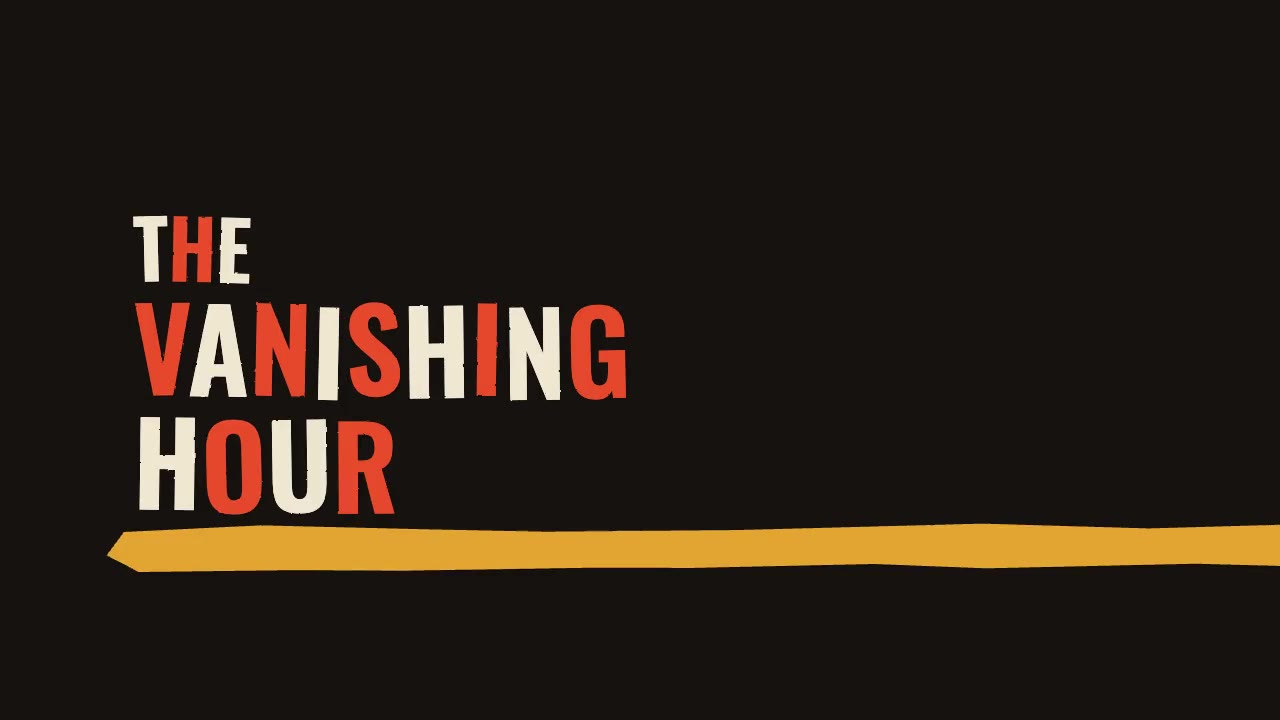
A jazz-tempo film title sequence in flat vermilion, mustard, bone and black: hand-cut paper shards jab in on the beat,…
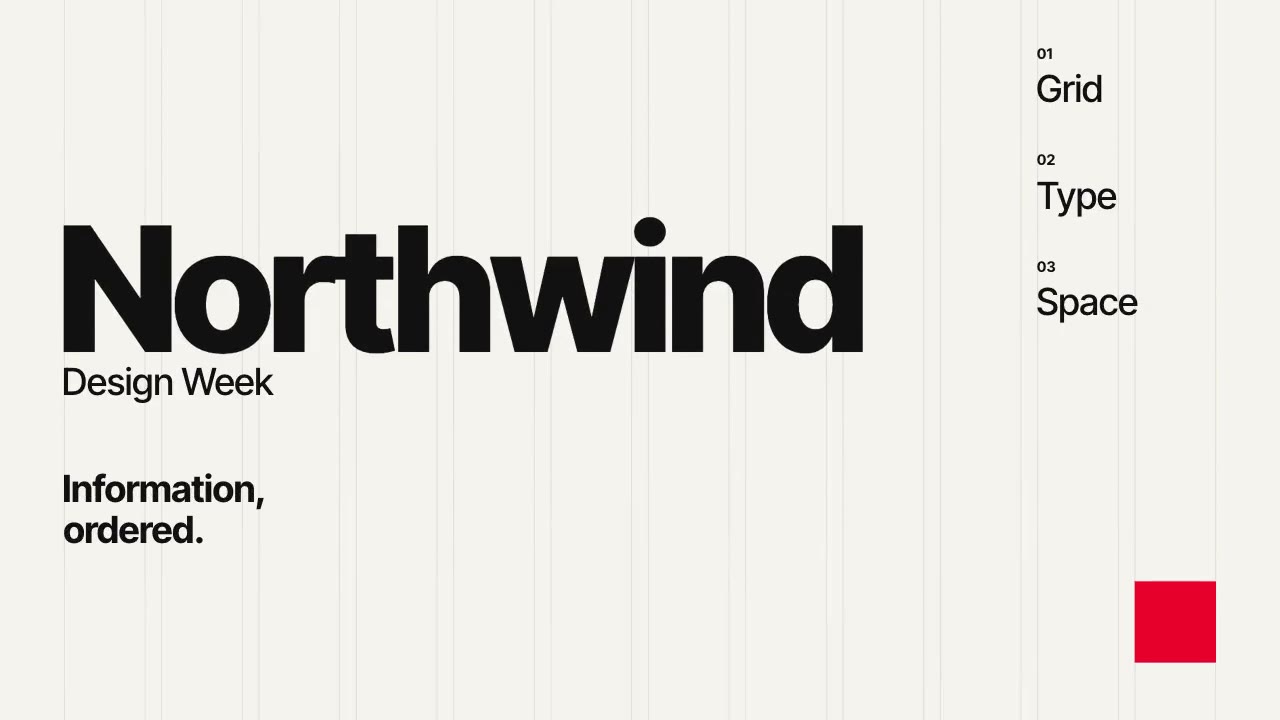
A Swiss-style event poster that builds itself on a visible 12-column grid: grotesque type rises out of baseline masks,…
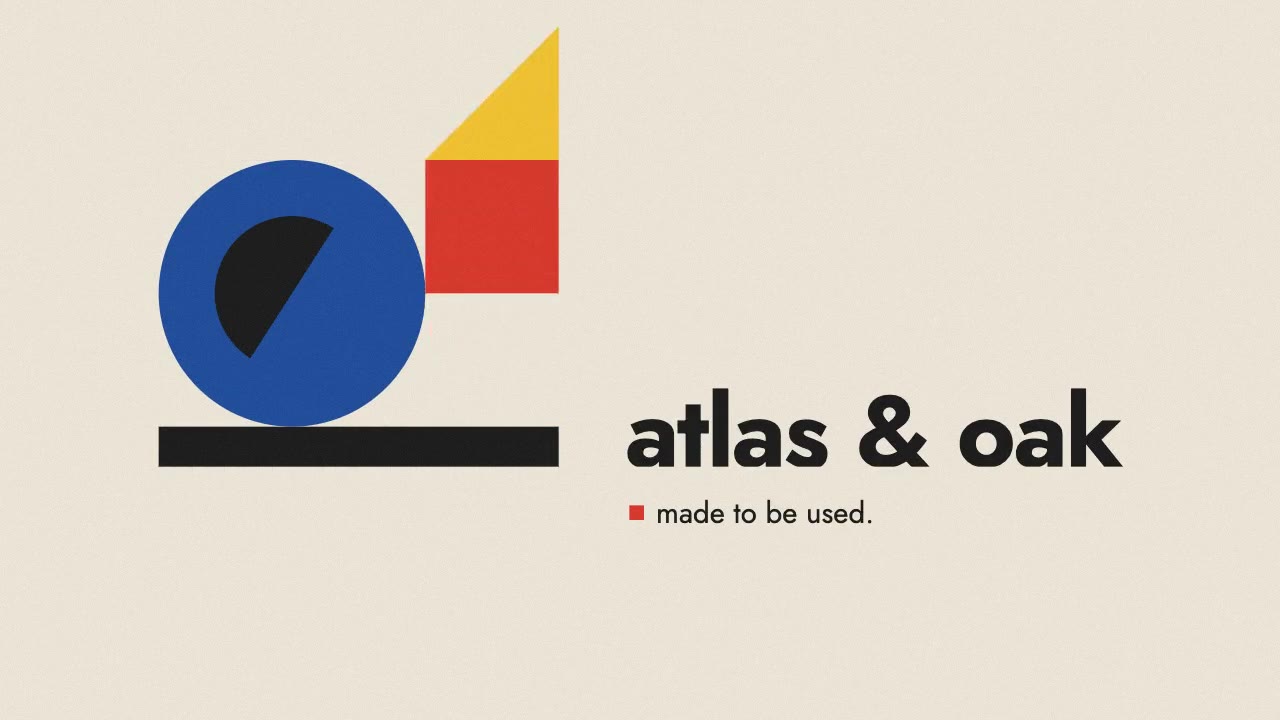
A primary-colored circle, square and triangle roll, drop and turn into place on a black bar, assembling a constructed B…
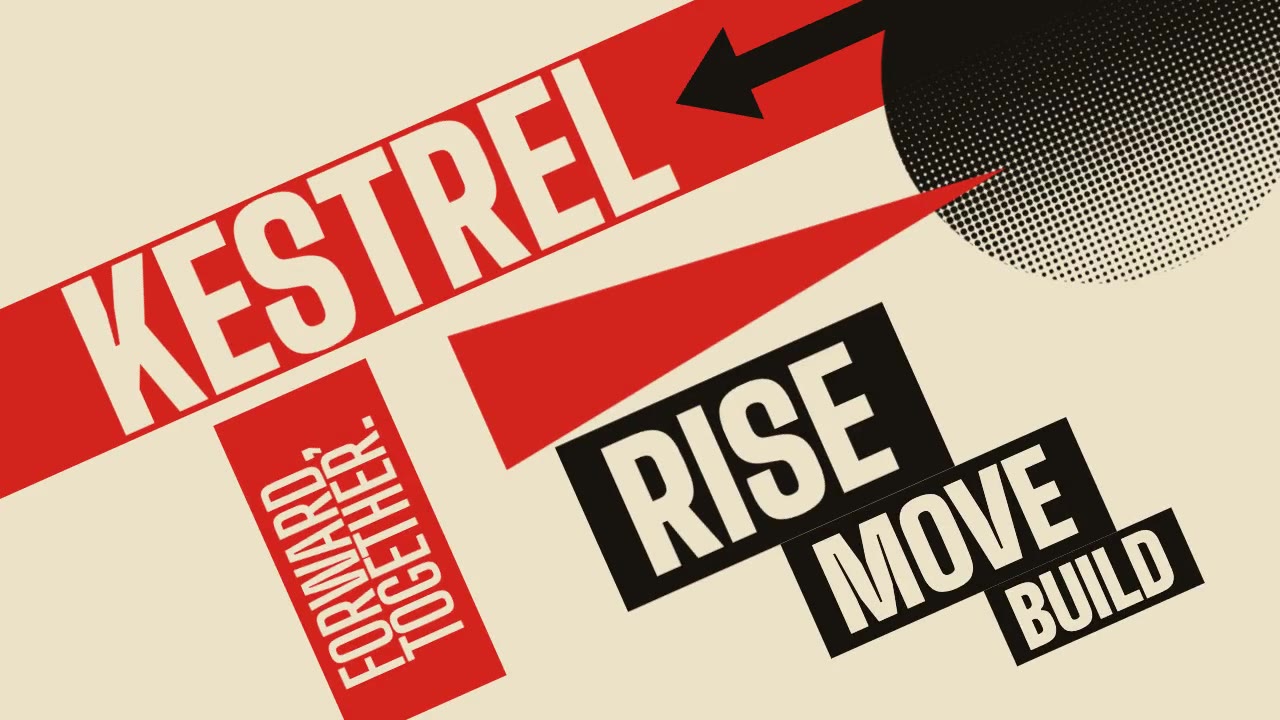
A Constructivist poster in motion: red bars, a wedge piercing a black circle, halftone fields and condensed uppercase t…
More like this on the motion design inspiration board: Motion graphics inspiration