
Bauhaus Geometry
A primary-colored circle, square and triangle roll, drop and turn into place on a black bar, assembling a constructed Bauhaus mark beside a lowercase geometric wordmark on warm paper.
Written and rendered by AI CSS Animations Oct 12, 2026
- Type
- prompt
- Made with
- Claude Opus 5.5 in Claude Code
- Built in
- SVG
- Topics
- Shapes · Logo reveal
About this style
The Bauhaus was a German school of art, craft and design founded by Walter Gropius in Weimar in 1919, later based in Dessau and Berlin until it closed in 1933. Its graphic language reduced form to primary colors, basic geometry and sans-serif type, with teachers such as Herbert Bayer and László Moholy-Nagy pushing asymmetric, functional layouts. The idea that a design should be shaped by its purpose, not its ornament, still underpins modern product, interface and brand design.
The prompt
Make a 10-second Bauhaus logo build: geometric parts assemble into a mark.

<inputs>
Brand: atlas & oak. Tagline: "made to be used." Three words: form, function, craft. Colors: the primaries below (map any brand palette onto their roles). Duration: 10s. If I don't give you something, use the default and don't ask.
</inputs>

<direction>
Palette: paper #EEE8DA, black #1A1A1A, red #D9372A, yellow #F2C230, blue #1E4C9A. Flat fills; a faint seeded paper grain at 4%.
Type: Jost 400 and 700, all lowercase in the Bauhaus manner: wordmark 150px (tracking -0.02em), tagline 44px, labels 26px.
Composition: a construction grid of 200px cells, shown and then removed. The mark is three cells wide and two tall, standing on a black bar (three cells × 60px): a blue circle filling the left 2×2 cells, a red square lower right, a yellow triangle on the square (Kandinsky's shape-color pairing). Mark left of center, wordmark to its right with its baseline on the bar's bottom edge: balanced, not symmetrical.
Motion is mechanical, like parts assembled on a workbench. Shapes travel straight rails; the circle rolls (rotation = distance ÷ radius) with a black half-disc inset so the roll reads; rotations go in 90° steps. Moves use cubic-bezier(0.7, 0, 0.2, 1) over 0.4–0.9s; landings get one small overshoot, cubic-bezier(0.34, 1.56, 0.64, 1) over 0.2s. Every motion has a cause and a clean stop. Real Bauhaus feels engineered; imitations scatter random colored shapes.
Banned: gradients, shadows, outlines on filled shapes, pastels, serif or script type, an uppercase wordmark, wobbling shapes, angles other than multiples of 45°, more than four parts in the mark.
</direction>

<structure>
0.0–0.6s: grid lines (1.5px black, 25% opacity) draw on.
0.6–1.0s: the bar wipes in from the left.
1.0–1.9s: the circle rolls in from off-stage left along the bar, decelerating into its cells.
1.9–2.3s: the square drops onto the bar and lands with the overshoot (scaleY 0.94 at contact).
2.3–3.0s: the triangle turns into place on the square in three 90° steps (0.16s each, 0.06s rests).
3.0–3.7s: a 3px compass arc sweeps 270° around the circle; arc and grid then fade over 0.4s.
3.7–4.8s: the wordmark slides up out of a mask, letters 35ms apart.
4.8–5.6s: the tagline appears beneath, led by a 22px red square bullet.
5.6–6.6s: function beat: the circle rolls right as the square, carrying the triangle, lifts over it and drops into the left position, on cubic-bezier(0.65, 0, 0.35, 1).
6.6–7.8s: the three words slide in under the tagline, each led by a 28px icon of its shape, 150ms apart.
7.8–10.0s: hold.
For other durations, scale every timestamp proportionally.
</structure>

<build>
One self-contained index.html, CSS and JS inline. Google Fonts via <link> are fine; no other libraries (no three.js: this style is flat). Draw in inline SVG. The stage is 1920×1080 (16:9), scaled to fit the window. Design for 60fps. window.seek(t), t in seconds, must compute every visual from t alone: no CSS transitions or animations, no setTimeout or setInterval, no state carried between frames, and randomness only from a seeded PRNG. Without ?render in the URL, drive seek from requestAnimationFrame so it plays in a browser (loop after a 1s end hold); with ?render, don't start that loop.
</build>

<check>
Before showing me, step through one frame per second: screenshot each and look at it. Fix overlaps, clipped or cramped text, accidental edge collisions, and anything off-style or Banned. Check the circle never slides without rolling. Confirm seek(duration) and seek(duration + 1) match, so the final frame holds.
</check>
Ours, and free to use under CC0: copy it, change it, ship it. No credit needed.
Similar prompts
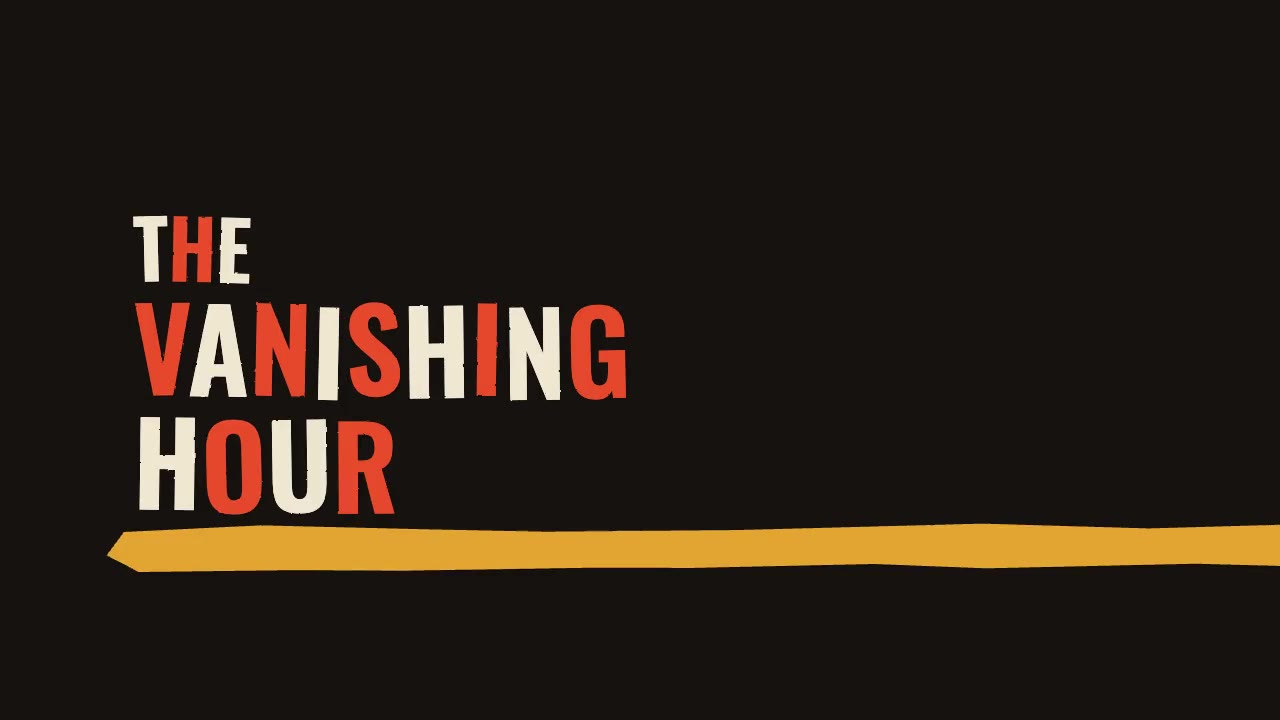
A jazz-tempo film title sequence in flat vermilion, mustard, bone and black: hand-cut paper shards jab in on the beat,…
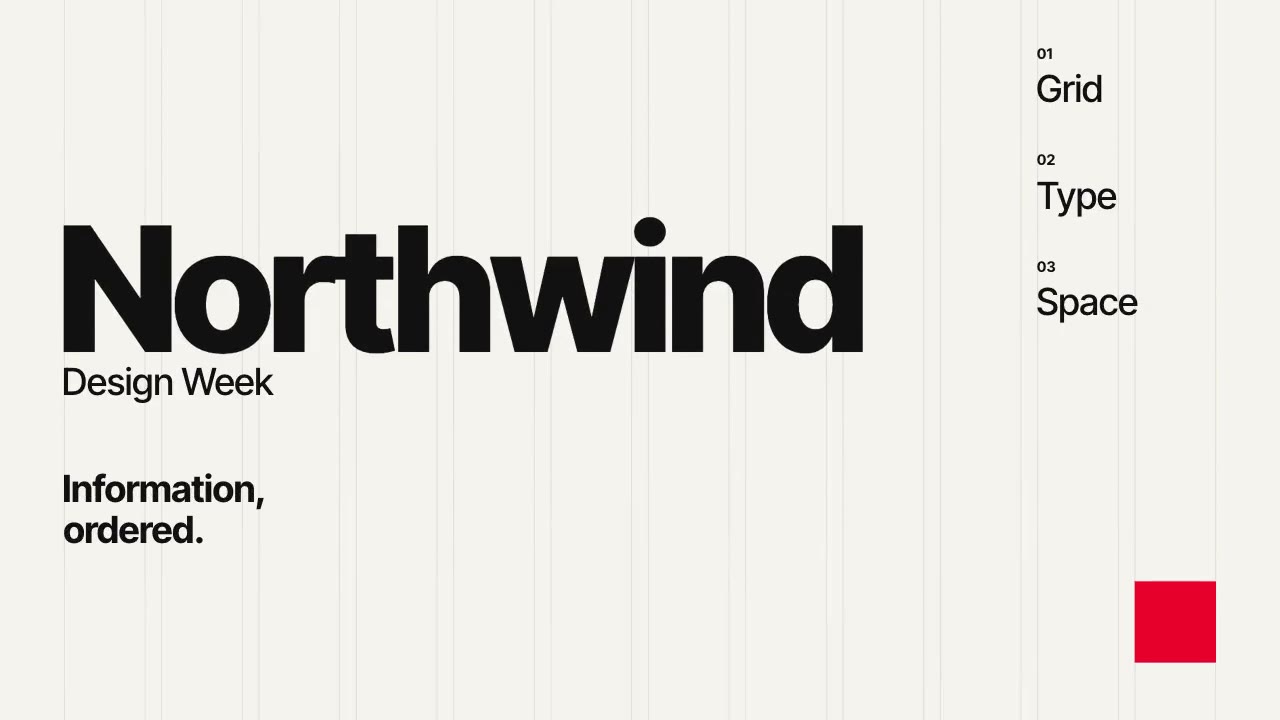
A Swiss-style event poster that builds itself on a visible 12-column grid: grotesque type rises out of baseline masks,…
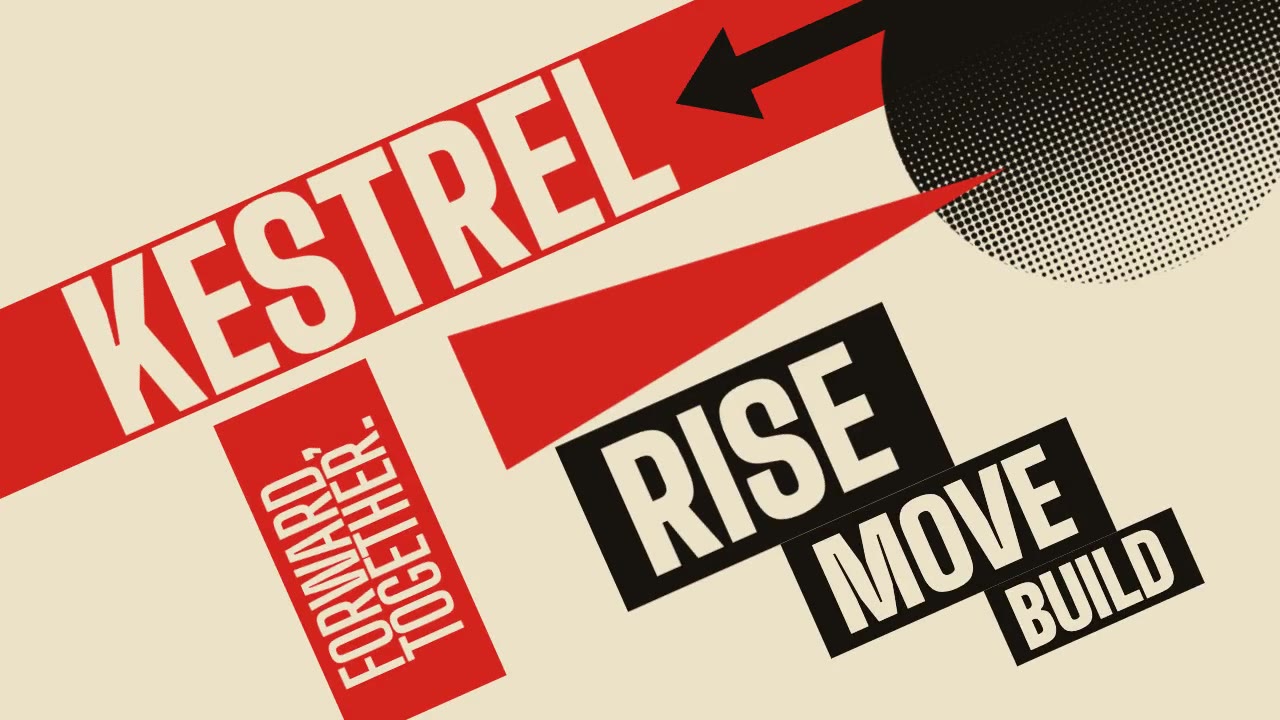
A Constructivist poster in motion: red bars, a wedge piercing a black circle, halftone fields and condensed uppercase t…
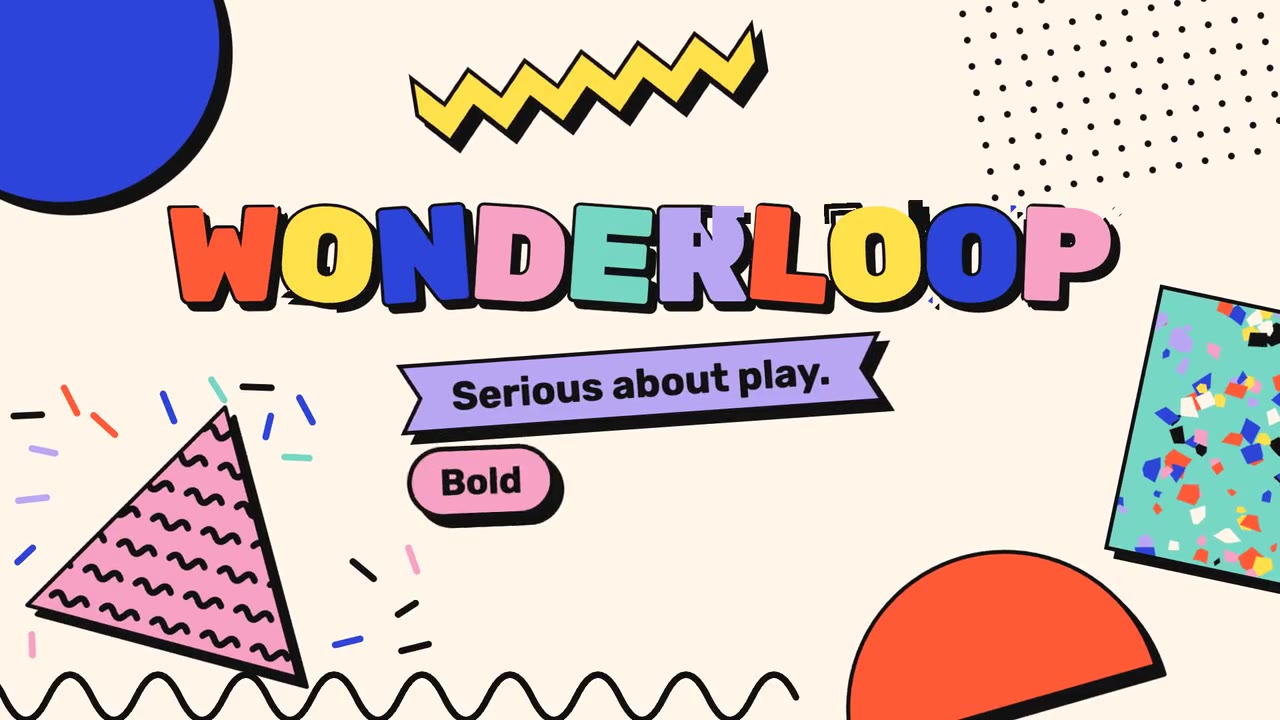
A loud Memphis-style title card: clashing pastel and primary shapes with thick black outlines, squiggles, terrazzo and…