
Oscilloscope Music
A green phosphor oscilloscope in X-Y mode: a glowing beam draws Lissajous figures that seem to turn in depth, morphs into a rotating wireframe cube, then writes a word in single-stroke capitals, with phosphor ghosts trailing each change.
Written and rendered by AI CSS Animations Oct 16, 2026
- Type
- prompt
- Made with
- Claude Opus 5.5 in Claude Code
- Built in
- Canvas
- Topics
- Music · Line art
About this style
Lissajous figures, the curves traced by two perpendicular oscillations, are named after French physicist Jules Antoine Lissajous, who studied them in the 1850s. In X-Y mode an oscilloscope steers its beam with two signals, so feeding it the left and right channels of a stereo track makes the sound itself draw the picture. A small scene of oscilloscope music composers writes audio that is both a piece of music and a drawing, and the green vector glow of a phosphor screen has become shorthand for analog electronics.
The prompt
Make a 10-second oscilloscope music piece: a green phosphor beam in X-Y mode draws Lissajous figures that morph into a rotating wireframe cube and then a word.

<inputs>
- Word: PHASE (four to six capital letters).
- Readout line: "VELVET OHM · PHASE".
- Shape: a wireframe cube.
- Length: 10 seconds.
If I don't give you something, use the default and don't ask.
</inputs>

<direction>
Palette: room #0B0C0D; bezel #1B1D1F with a 1px #2A2D30 top highlight; panel labels #C9CCC7; knob caps #2A2D30 with a #8A8F94 index line; screen glass #030806 with a faint radial lift to #07120C at the center; graticule #2E5A43 at 45%; phosphor core #E8FFF1, beam #6CFF9E, halo #1FBF5A.
Type: Share Tech Mono 400 for on-screen readouts (22px, #6CFF9E at 80%); Archivo Narrow 600 for panel labels (20px, uppercase, tracked 0.1em).
Instrument: a 1100×880 screen (24px radius) centered at (960, 540) with a 10×8 graticule of 110px divisions in 1px lines and minor ticks every 22px along the center axes. Bezel panels flank it: left (x 96–360) with VOLTS/DIV knobs for CH1 and CH2; right (x 1560–1824) with INTENSITY and FOCUS knobs and an X-Y push button. Readouts sit inside the screen's corners: CH1 500mV top left, CH2 500mV top right, X-Y bottom left, and the readout line bottom right once it appears.
The beam: every frame, build the figure as a polyline of 4,000 points along its path and draw it the way a beam excites phosphor: brightness proportional to 1 ÷ local speed (clamped), so slow corners glow and fast jumps fade to faint lines. Draw three passes with 'lighter' compositing: a 14px halo at 8%, a 5px beam at 30%, a 1.6px near-white core. Persistence: also draw the figure as it was 40, 80 and 120ms earlier at 35%, 15% and 6%, computed from t, so morphs leave a decaying ghost as P31 phosphor does. Retraced segments add up and glow brighter, as on a real scope.
Figures, in divisions (1 div = 110px), always within ±4.2 div horizontally and ±3.4 div vertically: Lissajous x = A·sin(aθ + δ), y = A·sin(bθ) with A = 3 div and a:b of 1:1, 1:2, 3:2 and 3:4 in turn, the phase δ drifting at 0.5 rad/s so each seems to turn in depth. The cube is one continuous route over its 12 edges (retracing a few, since every corner has three edges), in gentle perspective, rotating at 36°/s about a tilted axis. The word uses single-stroke capitals on a 6×10 grid, built from straight strokes and arcs and drawn letter by letter in one continuous path; the jumps between letters show as faint lines, which is correct.
Morphs: resample source and target to the same 4,000 points by arc length, rotate the target's start index to minimize total travel, then interpolate over 0.7s on cubic-bezier(0.45, 0, 0.55, 1).
The panel moves only when the signal changes mode: the X-Y button depresses at 0.9s, and the INTENSITY knob turns 30° as the word arrives.
The real thing behaves like a beam: brightness follows speed, retraced edges glow, jumps leave faint lines and the phosphor lingers. The cheap version is a glowing SVG stroke revealed with a dash offset.
Banned: dash-offset reveals, any color but phosphor green on the screen, TV scanlines, RGB split, flicker or strobing, camera shake, real instrument brands, anything flashing more than 3 times per second.
</direction>

<structure>
0.0–0.9s: the bezel and graticule fade up; a small spot warms at the screen's center from dark to full over 0.6s.
0.9–1.4s: the X-Y button depresses; the spot opens into a 1:1 circle (radius 0 → 3 div, easeOutCubic).
1.4–4.4s: the Lissajous sequence: 1:1 until 1.8s, then 1:2, 3:2 and 3:4, each a 0.7s morph followed by about 0.3s settled, δ drifting throughout.
4.4–6.2s: the figure morphs into the cube over 0.9s, and the cube rotates.
6.2–7.6s: the cube's spin slows to a stop (its angle integrated analytically, so it never jumps) as it morphs into the word over 1.0s, centered and 1.8 div tall.
7.6–8.4s: the readout line types in at 30ms per character; the INTENSITY knob turns.
8.4–10.0s: hold: the word steady, ghosts settled, nothing moving.
For other durations, give extra time to the settled holds between figures, never to the morphs, and keep at least 1s of final hold.
</structure>

<build>
One self-contained index.html, CSS and JS inline. Google Fonts via <link> are fine; no other libraries (no three.js: the cube is projected by hand). Draw in Canvas 2D, repainting every frame from scratch, with the backing store sized from the CSS size × devicePixelRatio; the bezel can be drawn once to an offscreen canvas. Canvas won't fetch fonts itself: await document.fonts.load() for each face, then define window.seek. The stage is 1920×1080 (16:9), scaled to fit the window. Design for 60fps. window.seek(t), t in seconds, must compute every visual from t alone: no CSS transitions or animations, no setTimeout or setInterval, no state carried between frames, and randomness only from a seeded PRNG. Every figure is an analytic function of θ and t, and the persistence ghosts are the same functions evaluated at earlier t. Without ?render in the URL, drive seek from requestAnimationFrame so it plays in a browser (loop after a 1s end hold); with ?render, don't start that loop.
</build>

<check>
Before showing me, step through one frame per second: screenshot each and look at it. Fix overlaps, clipped or cramped text, accidental edge collisions, and anything off-style or Banned. Check brightness varies along each figure (corners and turning points brighter than fast runs), the cube's edges are straight and meet at its corners, the word reads clearly at 1280×720, readouts never touch the trace, and the beam stays inside the graticule. Confirm seek(duration) and seek(duration + 1) match, so the final frame holds.
</check>
Ours, and free to use under CC0: copy it, change it, ship it. No credit needed.
Similar prompts

Original lyrics land word by word on a 120 BPM grid over a dark plum ground: small italic words tuck against giant expa…
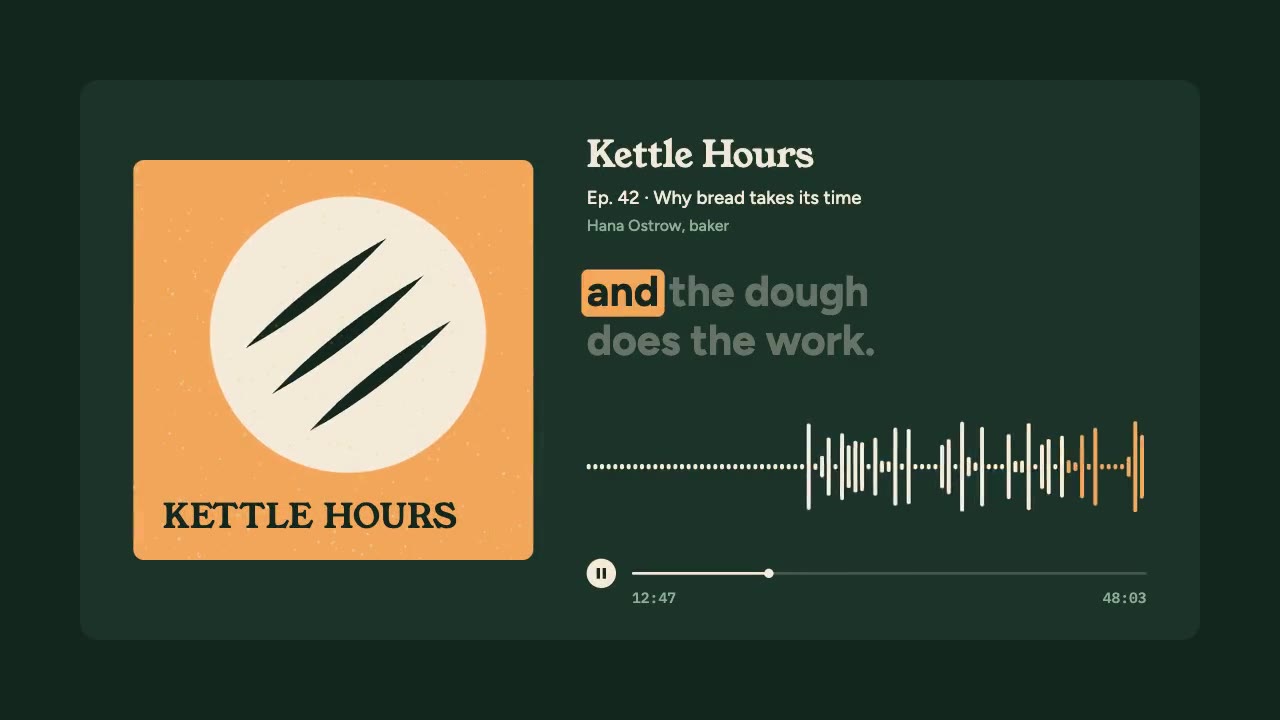
A podcast clip card on deep forest green: code-drawn bread cover art, a scrolling mirrored waveform whose peaks fall un…
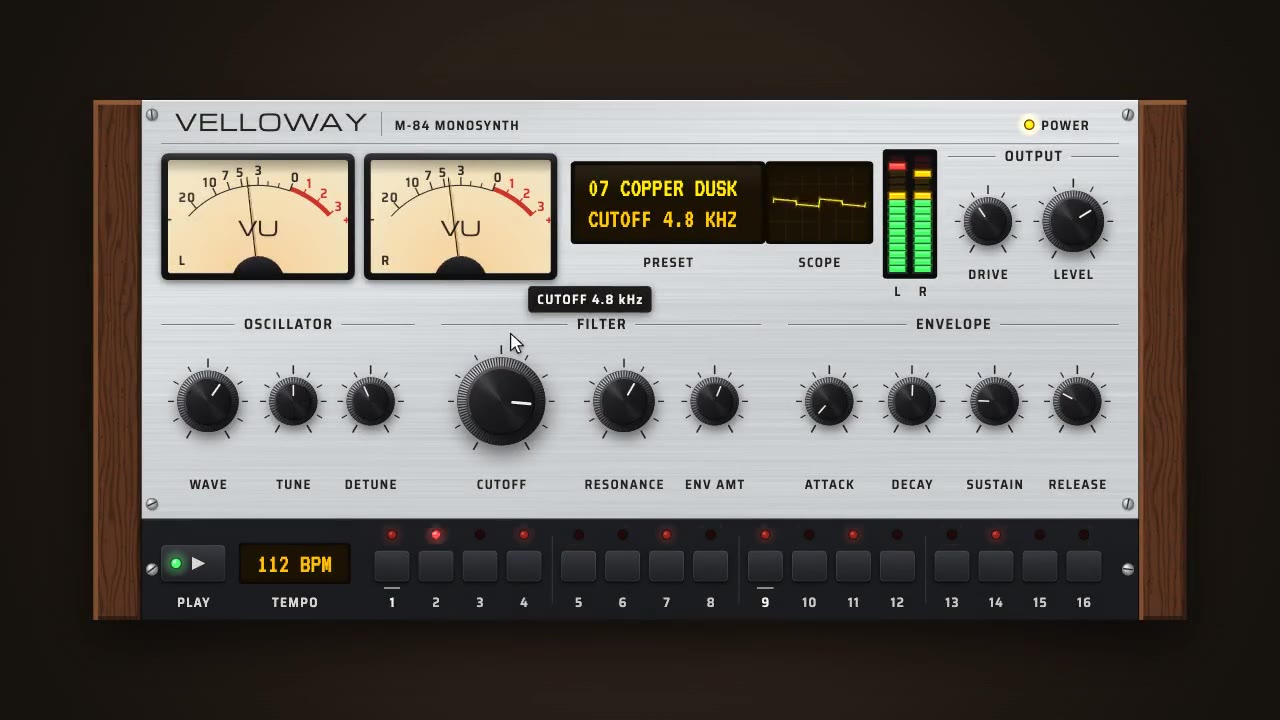
A brushed-aluminium synth plugin with walnut end cheeks powers up on a dark desk: a 16-step pattern plays, VU needles s…
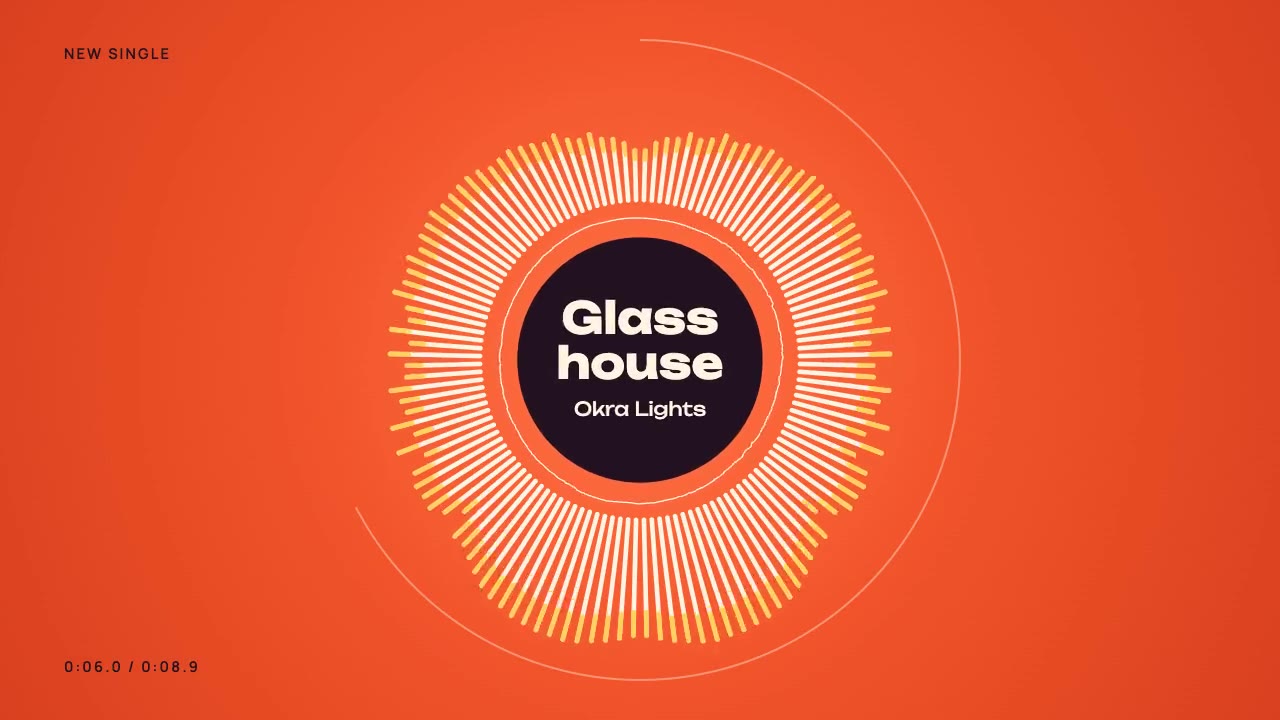
A coral-colored audio visualizer: a track synthesized in code drives a ring of 128 cream spectrum bars around an ink di…
More like this on the motion design inspiration board: Music video inspirationLine art animation inspiration