
Skeuomorphic Synth Plugin
A brushed-aluminium synth plugin with walnut end cheeks powers up on a dark desk: a 16-step pattern plays, VU needles swing with real ballistics, LED ladders bounce, and a cursor turns the big cutoff knob while its highlight stays put.
Written and rendered by AI CSS Animations Oct 16, 2026
- Type
- prompt
- Made with
- Claude Opus 5.5 in Claude Code
- Built in
- Canvas
- Topics
- Product UI · Music
About this style
Skeuomorphic software imitates the materials of a physical object, and audio plugins are one of the places the style never left. Many virtual instruments and effects copy studio hardware, with brushed metal panels, wooden end cheeks, knurled knobs and analog meters, because musicians read those controls at a glance. A VU meter's needle follows standard ballistics, reaching its reading in about 300 milliseconds, which is part of why an accurate one feels alive.
The prompt
Make a 10-second animation of a hardware-style synthesizer plugin playing itself: brushed metal, walnut end cheeks, knobs turning, VU needles swinging and LED meters bouncing.

<inputs>
If I don't give you something, use the default and don't ask.
- Maker and model: default "VELLOWAY", M-84 Monosynth
- Preset: default "07 COPPER DUSK"
- Pattern: default 112 BPM, 16 steps, steps 1, 4, 7, 9, 11, 14 on, accents on 1 and 9
- Sections: default OSCILLATOR (Wave, Tune, Detune), FILTER (Cutoff, Resonance, Env Amt), ENVELOPE (Attack, Decay, Sustain, Release), OUTPUT (Drive, Level)
- Length: default 10 seconds
</inputs>

<direction>
- Stage: a dark desk #16120E under a warm lamp pool (#2B2119); the plugin casts a soft 80px shadow.
- Plugin: 1640×780 at (140, 150): walnut end cheeks, an aluminium faceplate, a black anodized sequencer strip. Top row: two VU meters, an amber display, two LED ladders, OUTPUT knobs. Middle row: knob sections, Cutoff the largest. Strip: 16 step buttons with red LEDs, PLAY, "112 BPM".
- Textures, generated once from a seeded PRNG: aluminium #C9CCCF brushed by per-row value noise (±6%) with a soft specular band; walnut #5A3420 with noise-warped grain #3B2113 and a #8A5634 chamfer; anodized #1B1C1F; slotted screws.
- Silkscreen: Saira Semi Condensed 600 uppercase, tracked 0.1em: section titles 22px between engraved rules, labels 20px. Logo in Michroma 34px; the display in VT323 40px #FFB000 on #1B1206, beside a scope whose harmonics follow Cutoff.
- Knobs (132, 92, 72px): a knurled skirt, a matte black cap whose conic sheen stays fixed to the light, a white indicator, 300° of travel with 11 ticks. Only the indicator and knurl rotate.
- VU: cream faces #F2E7C6, warm backlight, a −20 to +3 scale with a red #C8312A zone, a thin needle with true ballistics (99% in 300ms, about 1.5% overshoot). Ladders: 16 segments (10 green #39D353, 4 amber #FFB000, 2 red #FF3B30, unlit at 14%) with a peak hold.
- Signal: precompute at load, at a fixed 1/240 s step, hits on the active 0.134s steps (5ms attack, 180ms decay, accents × 1.4), then needles, ladders and peaks; seek(t) only reads them.
- Motion: knob moves 0.6–0.9s on cubic-bezier(0.45, 0, 0.2, 1); camera moves 1.2s on cubic-bezier(0.65, 0, 0.35, 1).
- Premium is an object you could touch: light that stays put while knobs turn, needles with weight, real grain. Cheap is grey gradients called metal, spinning knob images and meters that jump.
Banned: highlights rotating with knobs, flat grey "metal", neon, photo textures, real manufacturer names, text under 20px, emoji, anything flashing more than 3 times per second.
</direction>

<structure>
- 0.0–1.0: The lamp pool brightens; the plugin rises 30px into it (0.9s, cubic-bezier(0.22, 1, 0.36, 1)); a sheen glides across the metal.
- 1.0–1.47: PLAY lights; VU backlights warm over 0.6s; the display shows the preset.
- 1.47–4.2: The pattern starts on the downbeat at 1.47s: the step LED chases, needles swing, ladders bounce; Wave, Resonance and Decay ease to new positions.
- 4.2–6.6: A cursor drags Cutoff from −70° to +95°; a tooltip climbs on a log scale from "CUTOFF 380 Hz" to "4.8 kHz"; the scope brightens. The cursor fades.
- 6.5–7.7: The camera pushes in 1.4× on the VU meters, needles kissing 0 VU on accents.
- 7.7–8.9: The last hit lands on the downbeat at 7.90s; the transport stops at 8.4s; the camera pulls back as needles fall, ladders clear and the chase rests on step 1.
- 8.9–10.0: Hold.
For other lengths, add or remove whole bars and hold at least 1s.
</structure>

<build>
One self-contained index.html (inline CSS and JS), a 1920×1080 (16:9) stage scaled to fit the window, built for 60fps. Google Fonts via <link>, awaiting document.fonts.load() for each face before defining window.seek. Canvas 2D sized from CSS size × devicePixelRatio, textures in offscreen canvases; no three.js. window.seek(t) (t in seconds) sets every visual from t alone, clamping past the end: no CSS transitions or animations, no setTimeout/setInterval, no state carried between frames, randomness only from a seeded PRNG. Without ?render in the URL, drive seek from requestAnimationFrame; with ?render, don't start that loop.
</build>

<check>
Before showing me, step through one frame per second (0–10s) and look at each. Fix overlaps, clipped or cramped text and anything off-style or Banned. Knob highlights stay fixed while indicators turn, and needles never jump. Confirm seek(10) and seek(11) match.
</check>
Ours, and free to use under CC0: copy it, change it, ship it. No credit needed.
Similar prompts

A slow, ribbon-like gradient mesh flows in a skewed band behind sharp headline type, while white payment, API and chart…
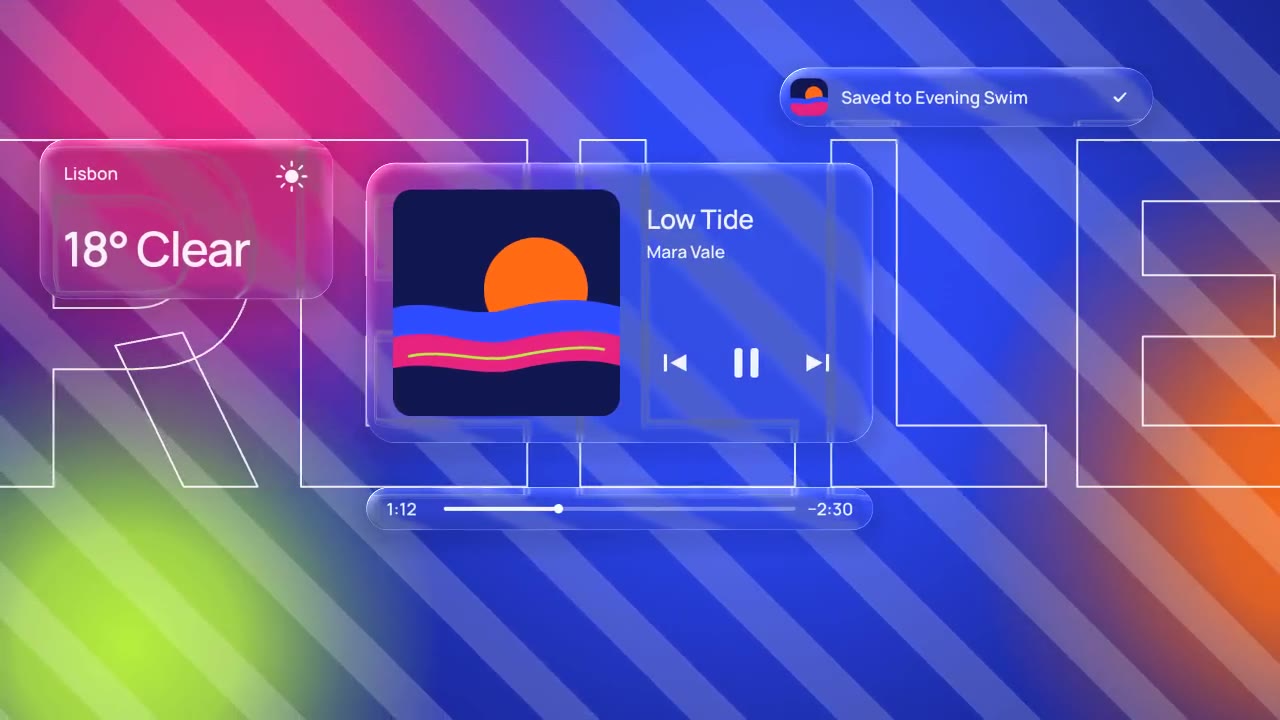
Glass panels with real refraction float over vivid, striped color: their rims bend what's behind them, two buttons fuse…
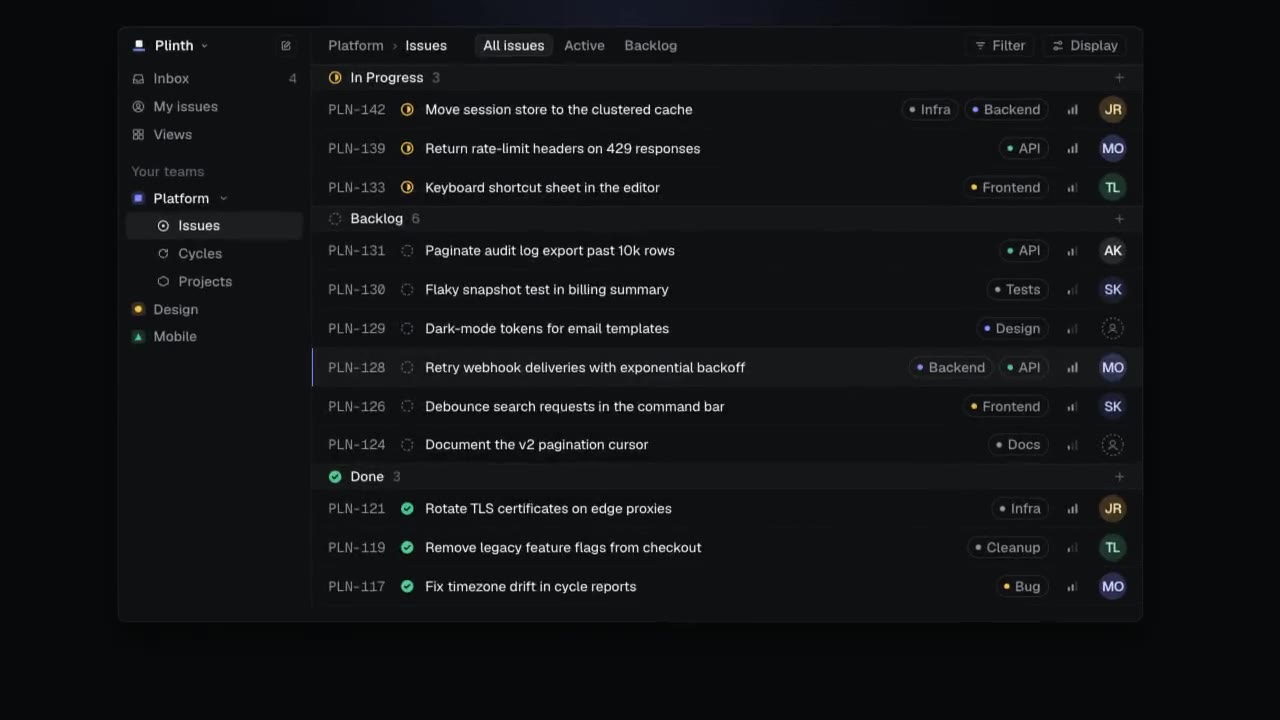
A dark-mode work tool drawn in hairlines and quiet radial glows: issue rows populate, ⌘K opens a command menu, a comman…
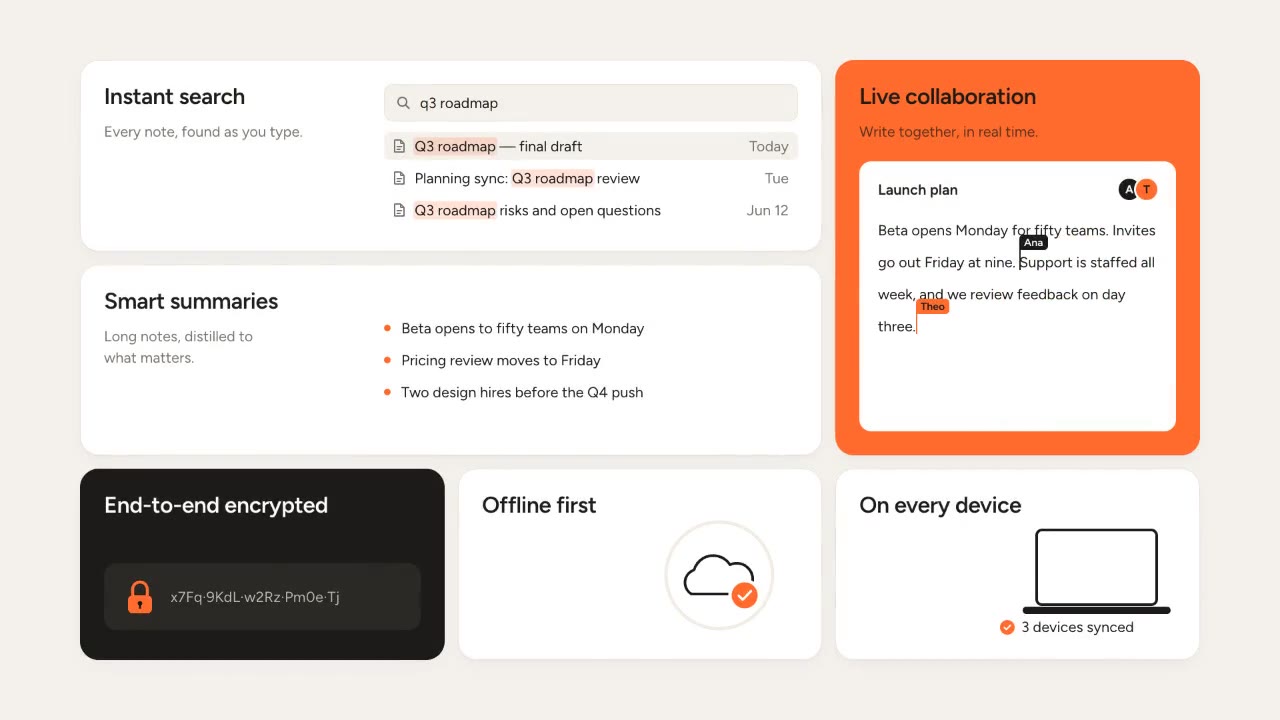
Rounded tiles spring into a bento grid on warm paper, each acting out one feature in a small animation, then the tiles…
More like this on the motion design inspiration board: UI animation inspirationMusic video inspiration