
Clockwork Gears
A macro journey through a mechanical watch at quarter speed: the escape wheel steps with each tick, the pallet fork snaps, gilt wheels mesh at true ratios and the balance swings, then the camera pulls back to the full movement on a sage bench mat.
Written and rendered by AI CSS Animations Oct 16, 2026
- Type
- prompt
- Made with
- Claude Opus 5.5 in Claude Code
- Built in
- three.js
- Topics
- 3D · Shapes
About this style
A mechanical watch stores energy in a mainspring and releases it through a gear train to an escapement, which lets the train advance one tooth at a time in step with an oscillating balance wheel; that release is the tick. A common beat rate of 21,600 vibrations per hour means six ticks a second. Fine movements are decorated as well as engineered, with Geneva stripes on the bridges, perlage on the plate, heat-blued screws and synthetic ruby bearings. Watchmakers show them off through display casebacks and in macro films that follow the gear train.
The prompt
Make a 10-second clockwork film: gilt gears mesh at true ratios while the escapement ticks, then the camera pulls back to reveal the whole watch movement.

<inputs>
- Maker: Ferrand & Hale.
- Calibre: FH-21, hand-wound.
- Specs: 21,600 vph · 3 Hz · 42 h power reserve · 19 jewels.
- Note: "Shown at quarter speed."
- Length: 10 seconds.
If I don't give you something, use the default and don't ask.
</inputs>

<direction>
Set: a pale sage bench mat #D3DAD0 with a fine weave. Ink #2B2E2A, secondary #5D635B.
Movement, 1 unit = 1 mm, 32 mm across: rhodium plate #CDD1D4 with perlage; bridges with Geneva stripes and polished bevels; gilt wheels #C9A24A with curved spokes; blued screws #2B4FA0; ruby jewels #B0192F in gold chatons; a gold balance with a blued hairspring.
True ratios (module 0.1 mm, centers at summed pitch radii, teeth interleaved): barrel 80 → center pinion 10 (one turn an hour); center 80 → third pinion 10; third 75 → fourth pinion 10 (one turn a minute); fourth 72 → escape pinion 6; a 15-tooth escape wheel at 12 turns a minute: 6 beats a second, 21,600 vph.
Time runs at quarter speed, τ = 0.25·t, so beats come 1.5 times a second.
Escapement: the escape wheel moves only in each impulse, angle = 12°·(n + smoothstep(0, 0.22, f)), n = floor(6τ), f = fract(6τ), dead still between. The pallet fork snaps ±9° between banking pins. The balance swings 220°·sin(2π·3τ). Other wheels follow through the ratios: the fourth creeps, the rest barely move.
Light: a soft overhead key and a low raking light, so stripes and perlage glimmer as the camera moves. No depth-of-field blur.
Camera: one continuous move from 9 mm off the escape wheel, along the train to the balance, then back to the whole movement in a steel case ring, orbiting 20°, on cubic-bezier(0.45, 0, 0.15, 1).
Final layout: the movement near (1200, 540), 780px across. HTML type at x 140, vertically centered: maker in Libre Caslon Display 400, 60px, uppercase, tracking 0.12em; calibre and specs in Fragment Mono, 24px and 22px, one per line; the note at 20px, 70% opacity.
Premium is mechanical truth: meshing teeth, an escape wheel dead still between ticks, stripes catching moving light. Cheap is gold gears spinning at random speeds in a black void.
Banned: gaps or overlaps between teeth, a continuously turning escape wheel, made-up speeds, steampunk clutter, black voids, light pulsing with ticks, anything flashing more than 3 times per second.
</direction>

<structure>
- 0.0–1.4s: macro on the escape wheel and pallet fork, the wheel stepping 12° per beat.
- 1.4–3.0s: the camera tracks along the train; the escape pinion turns the creeping fourth wheel.
- 3.0–4.4s: the balance swings into view, hairspring breathing.
- 4.4–7.4s: the pull-back reveals the full movement inside its case ring.
- 7.4–8.6s: the type block rises 12px and fades in, lines 0.12s apart, on cubic-bezier(0.22, 1, 0.36, 1).
- 8.6–10s: hold on the composed frame; the escapement keeps ticking.
Other lengths: stretch the macro first; keep quarter speed and 1.2s of hold.
</structure>

<build>
One self-contained index.html, inline CSS and JS, on a 1920×1080 (16:9) stage scaled to fit the window, built for 60fps. Google Fonts via <link>, awaited with document.fonts.load() before seek exists.
window.seek(t) sets every visual from t alone: no CSS transitions or animations, no setTimeout/setInterval, no state carried between frames, randomness only from a seeded PRNG. Every part is a closed-form function of τ.
Without ?render in the URL, drive seek from requestAnimationFrame; with ?render, don't start that loop.
three.js as an ES module pinned to three@0.160.0 via a jsDelivr import map (`three`, `three/addons/`); preserveDrawingBuffer: true; one render per seek. No image, model or typeface files beyond Google Fonts.
</build>

<check>
Before showing me, step through one frame per second (0–10s) and look at each. Fix overlaps, clipped or cramped text and anything off-style or Banned. Look for teeth with gaps or overlaps at macro distance, an escape wheel moving between impulses, wheel speeds that break the ratios. Confirm the final frame holds.
</check>
Ours, and free to use under CC0: copy it, change it, ship it. No credit needed.
Similar prompts

A slow golden-hour glide down a faceted valley: flat-shaded ridges, a low sun, fog melting the far range into the horiz…
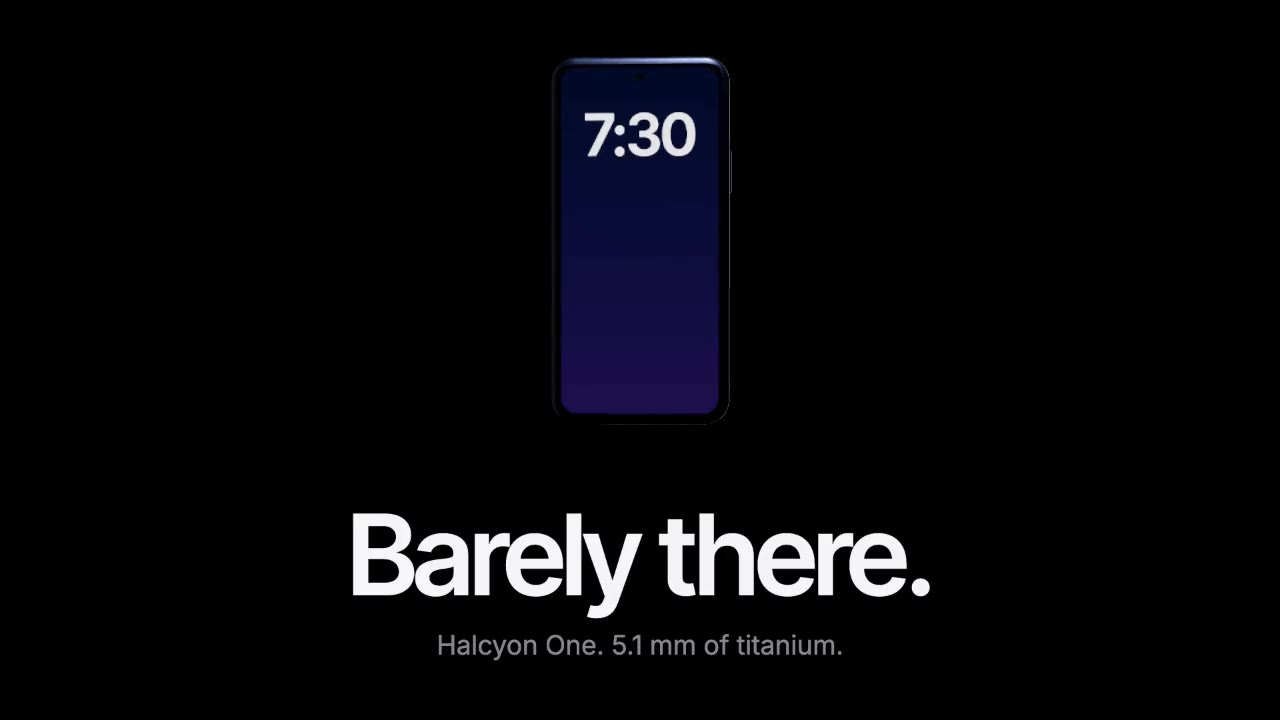
A device built in three.js rises out of total darkness while a softbox reflection glides along its titanium edge, then…

A toy-like isometric city block that builds itself on a floating slab: bevelled buildings rise floor by floor, cars loo…
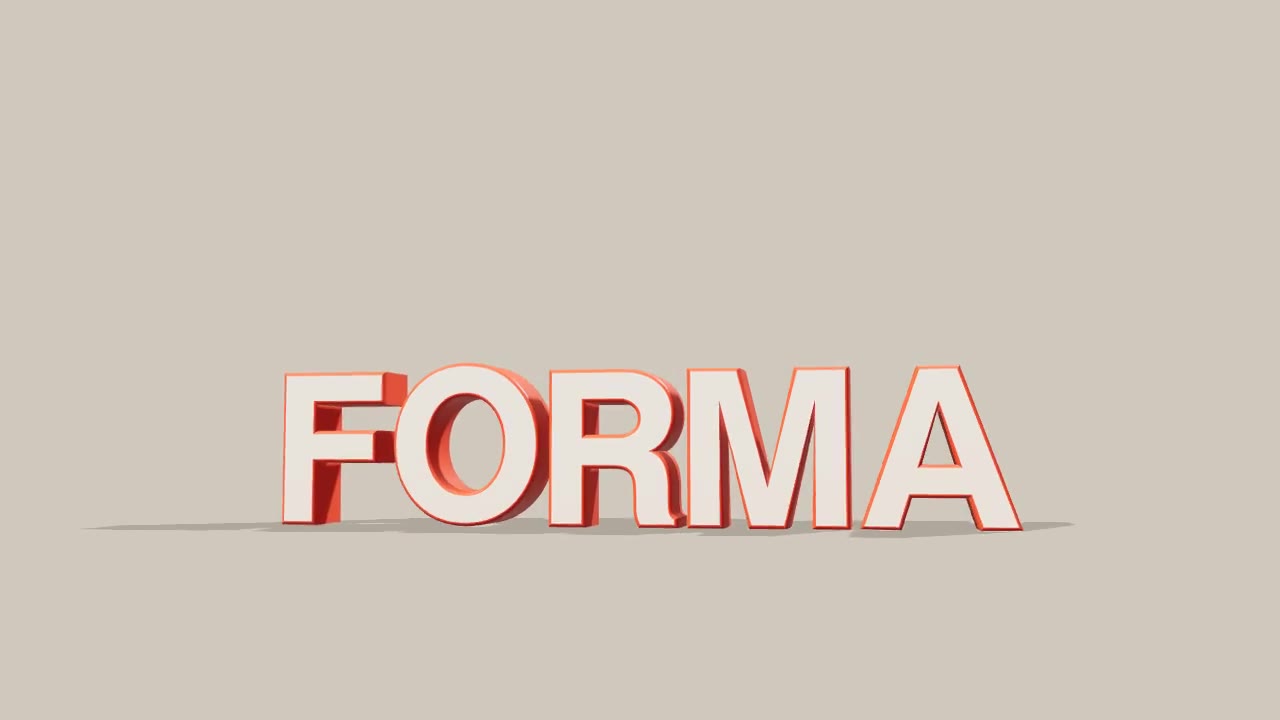
Chunky two-tone 3D letters swing into place one by one on a seamless studio sweep, lit like a product shot with soft sh…
More like this on the motion design inspiration board: Motion graphics inspiration3D motion design inspiration