
Walk Cycle
A woman in a cobalt coat and red scarf walks a crafted cycle down a gouache-textured morning street, passing a bakery, a bookshop and a florist in parallax with her scarf and tote trailing, then slows and stops at a café door as a serif title appears.
Written and rendered by AI CSS Animations Oct 18, 2026
- Type
- prompt
- Made with
- Claude Opus 5.5 in Claude Code
- Built in
- Canvas
- Topics
- Characters
About this style
The walk cycle is a foundation of character animation: a loop of two steps built from a few key poses, usually called contact, down, passing and up. Eadweard Muybridge's photographic studies of people and animals in motion, published in the 1880s, gave animators frame-by-frame reference, and Richard Williams' book The Animator's Survival Kit (2001) made the four-pose breakdown standard teaching. Side-scrolling parallax, with background layers sliding at different speeds, goes back to the multiplane camera Disney first used in The Old Mill in 1937. Brands, games and explainer films still use a good walk to carry a character through a world.
The prompt
Make a 10-second character walk: a crafted side-view walk cycle down a city street in parallax, ending as the walker stops at a café door.

<inputs>
If I don't give you something, use the default and don't ask.
- Walker: a young woman in a cobalt coat, a tomato-red scarf, charcoal trousers and cream sneakers, a mustard tote on her shoulder.
- Street: Hazel Row (fictional), passing Hazel Row Bakery, Second Shelf Books and Fern & Stem, and stopping at Ninth Hour Café.
- Title: "On Foot"
- Line: "Hazel Row, 7:45 am"
- Length: 10 seconds.
</inputs>

<direction>
- Look: editorial illustration in gouache: flat shapes in a warm morning palette, each with a dry, slightly uneven painted texture and soft irregular edges, staged as a side-scrolling street in four parallax planes. The walk is the star.
- Palette: sky #F7DCBF with a pale sun disc #FFF0D6 high right; far skyline #C2B0CF and #AE9BC0; shopfronts terracotta #D8684A, sage #8DAE8A, mustard #E2AE4A and teal #2F6F73, cream trim #F4E8D4, window glass #3E4A5C with a warm reflection band #F5C88E; awnings striped in pairs of those colors; sidewalk #DCCDB7 with paving joints #C4B39B; curb #B4A28B; road #6E6874; lamp posts #24423A; walker coat #2D4EA6 (shade #213B7E), scarf #E2483D, trousers #2B2A33, sneakers #EFE6D6 with soles #C9BBA5, skin #C68A64, hair #2A1D19, tote #E8B847; text #2B2A33.
- Gouache texture, generated once at load: a seeded paper grain plus a directional brush-streak texture, multiplied over every plane at 18%; each shape's edge is displaced by fixed seeded noise (±1.5px) so it reads painted and never boils.
- Layout: the walker stays at x 820 with her feet on y 905. The sidewalk spans y 850–940, the curb 940–960, and a strip of road runs below. Shopfronts stand on y 850 and rise no higher than y 330; everything above y 320 is sky, clouds and the sun, so the title sits on open sky.
- Planes and speeds, as the camera tracks the walker: clouds 0.08×, far skyline 0.3×, the shop row 0.85×, sidewalk and curb 1.0×, and foreground lamp posts on the curb at 1.35×. Paint the shop row once at load into a long offscreen strip: four shops separated by brick piers, each with a striped awning, a sign, windows with goods on shelves (loaves, book spines, flower buckets, cups and a coffee machine), a door and a planter. Solve its offset so the café door is centered at x 1080 when she stops. Foreground lamps pass in front of her only around 1.6 s and 4.2 s, never near 6.0 s or after 7.0 s.
- The walker: 470px tall, in profile facing right, a 2D rig drawn from joint positions every frame: pelvis, torso leaning forward 4°, neck, head with hair, upper and lower arms, hands, thighs, shins, feet, and toes that bend at toe-off. The coat hem, scarf ends and tote are secondary chains.
- The walk, from real key poses: one step every 0.5 s (a 1.0 s cycle) with a 230px stride, so the ground moves at exactly 460 px/s and the planted foot never slides.
  - Contact (0% of a step): front leg forward and straight, heel down and toe up 15°; back leg behind, on its toe; arms at their widest, opposite to the legs.
  - Down (20%): weight drops onto the front leg, knee bending 18°; the pelvis at its lowest (−14px).
  - Passing (50%): the support leg under the hips, nearly straight; the swing leg bent about 60° at the knee, foot 40px up; arms passing the body.
  - Up (75%): the support leg pushes off, heel lifting; the pelvis at its highest (+8px); the swing leg reaches forward.
  Interpolate joint angles between the keys with a Catmull-Rom spline over the step phase. The head follows the pelvis bob 0.04 s late with a 2° nod; the shoulders counter-rotate against the hips (shown as a 3% change in torso width); the hands travel in arcs.
- Follow-through, computed analytically from the walk phase: the scarf (a 10-segment chain) trails back and lifts on each up, its tip 0.12 s behind; the tote swings as a damped pendulum 0.1 s behind the shoulder; the coat hem flips 6° on each passing.
- The stop: the last steps shorten (230, then 150, then 70px) as the ground slows to match; both feet plant, the body overshoots 6px forward and settles back on cubic-bezier(0.2, 0, 0, 1) over 0.5 s; the scarf and tote swing forward past vertical and settle over 0.6 s; the head turns toward the camera through one in-between drawing into a three-quarter view.
- Type: shop signs in "Instrument Serif" 400, 48px, with small lines in "Instrument Sans" 600, 20px, uppercase, tracked 0.18em; the title in Instrument Serif italic, 120px, #2B2A33, top-left at (120, 90); the line in Instrument Sans 500, 26px, uppercase, tracked 0.16em, beneath. Text rises 12px as it fades in over 0.6 s on cubic-bezier(0.22, 1, 0.36, 1).
- Premium: a walk with weight (contact, down, passing, up), a foot that sticks to the pavement, arcs and follow-through, and parallax that sells depth. Cheap: scissor legs swinging from the hip, a body gliding at one height, feet skating over a scrolling floor.
Banned: feet sliding during contact, legs with no knee bend, a constant-height body, motion blur, outlines on every shape, real shop or brand names, crowds or traffic, anything flashing more than 3 times per second.
</direction>

<structure>
- 0.0–0.6s: already walking from the first frame (t = 0 is a contact pose), the street scrolling, the bakery behind her.
- 0.6–2.4s: past Hazel Row Bakery; a lamp post sweeps by in front around 1.6 s.
- 2.4–4.4s: past Second Shelf Books; a gust at 3.2 s doubles the scarf's swing for one cycle; a second lamp passes around 4.2 s.
- 4.4–6.6s: past Fern & Stem; she glances at the flower buckets (the head dips 6° and returns, 5.2–5.8 s). At 6.0 s she is on a contact pose in front of the florist with no lamp near her: a clean, complete stride.
- 6.6–8.0s: the café comes into view; her strides shorten and the ground slows.
- 7.6–8.6s: the title and line rise in.
- 8.0–8.8s: the stop at the café door: feet planted, overshoot and settle, scarf and tote swing and settle, the head turns toward the camera.
- 8.8–10.0s: hold, still.
For other lengths, add or remove whole walk cycles before the stop and keep at least 1 s of hold.
</structure>

<build>
- One self-contained index.html (inline CSS and JS), a 1920×1080 (16:9) stage scaled to fit the window, designed for 60fps. No image, video, texture or model files: every shape and texture is generated in code.
- window.seek(t), t in seconds, computes every visual from t alone: no CSS transitions or CSS animations, no setTimeout/setInterval, no state carried between frames, randomness only from a seeded PRNG. Anything cumulative is solved analytically from t or precomputed once at load at a fixed step. Past the end, seek clamps to the last frame.
- Without ?render in the URL, drive seek from requestAnimationFrame so it plays in a browser (loop after a 1s end hold); with ?render, don't start that loop.
- Google Fonts via <link> are fine; await document.fonts.load() for each face before defining window.seek.
- Engine: Canvas 2D, repainting every frame from scratch, the backing store sized from CSS size × devicePixelRatio. Canvas won't fetch fonts itself, so the awaited loads matter. No other libraries.
- Paint the sky, skyline, shop strip and textures once at load into offscreen canvases; each frame composites the planes at their offsets and draws the walker's rig fresh. Distance walked is the closed-form integral of speed, and the step phase comes from that distance and the step table (full strides, then 150 and 70px), so every pose and secondary chain is a direct function of t. Request Instrument Serif in both roman and italic.
</build>

<check>
Before showing me, step through one frame per second (t = 0…10): screenshot each and look at it. Fix overlaps, clipped or cramped text, and anything off-style or Banned. Check the planted foot holds still against the pavement through every contact (log its position relative to the ground across a step: drift under 1px), the pelvis is lowest on down and highest on up, the arms swing opposite the legs, the 6.0 s frame is a clean contact pose with no lamp over her, the café door lands centered at x 1080, and the title sits on open sky. Confirm seek(10) and seek(11) match, so the final frame holds.
</check>
Ours, and free to use under CC0: copy it, change it, ship it. No credit needed.
Similar prompts
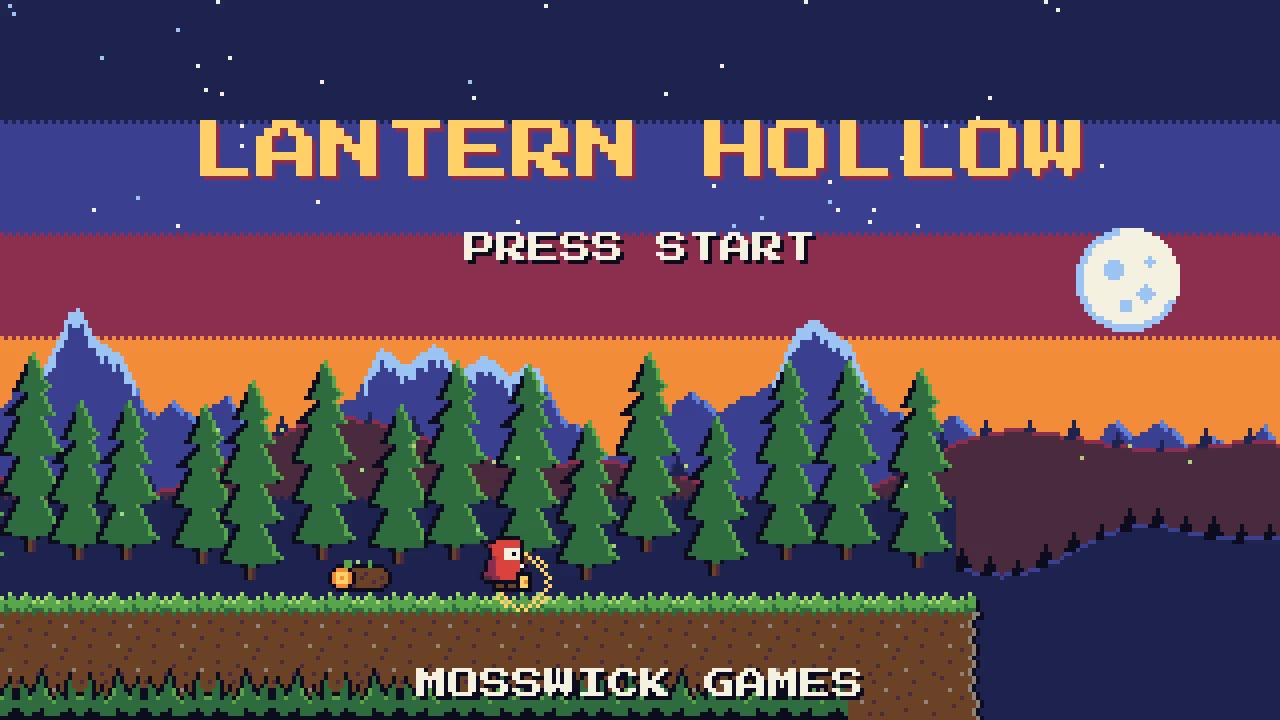
An 8-bit attract screen: a dusk forest scrolls in parallax layers as a tiny lantern-carrying hero walks, hops a log and…
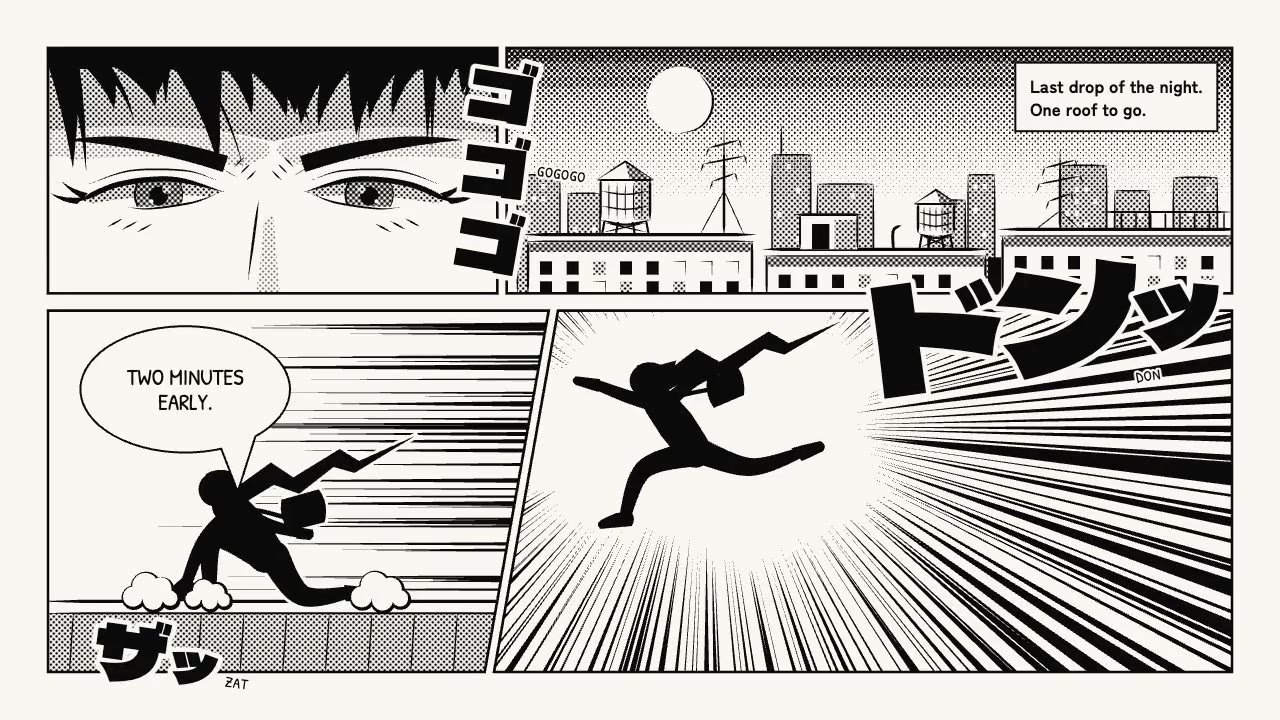
A black-and-white manga page read right to left: rooftops, narrowed eyes, a silhouetted courier leaping through focus l…
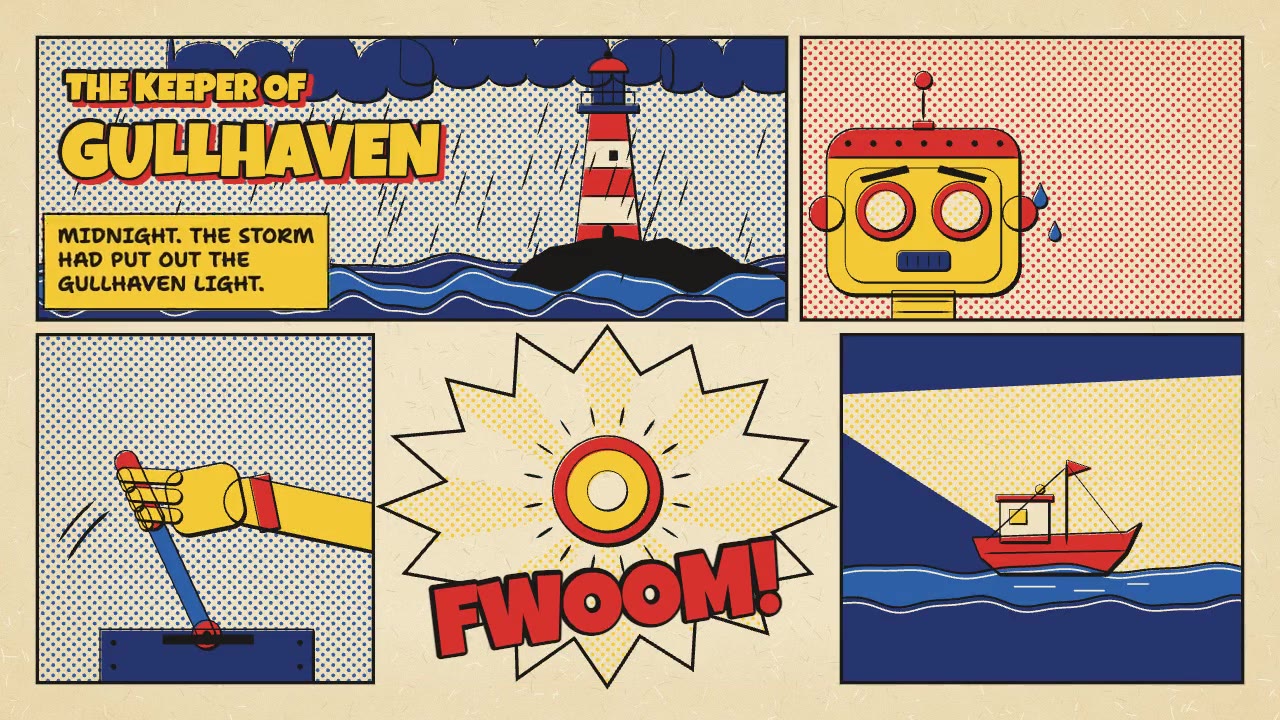
A five-panel comic page made the old way: blue pencil roughs, weighted black inks, flat process color with Ben-Day dots…
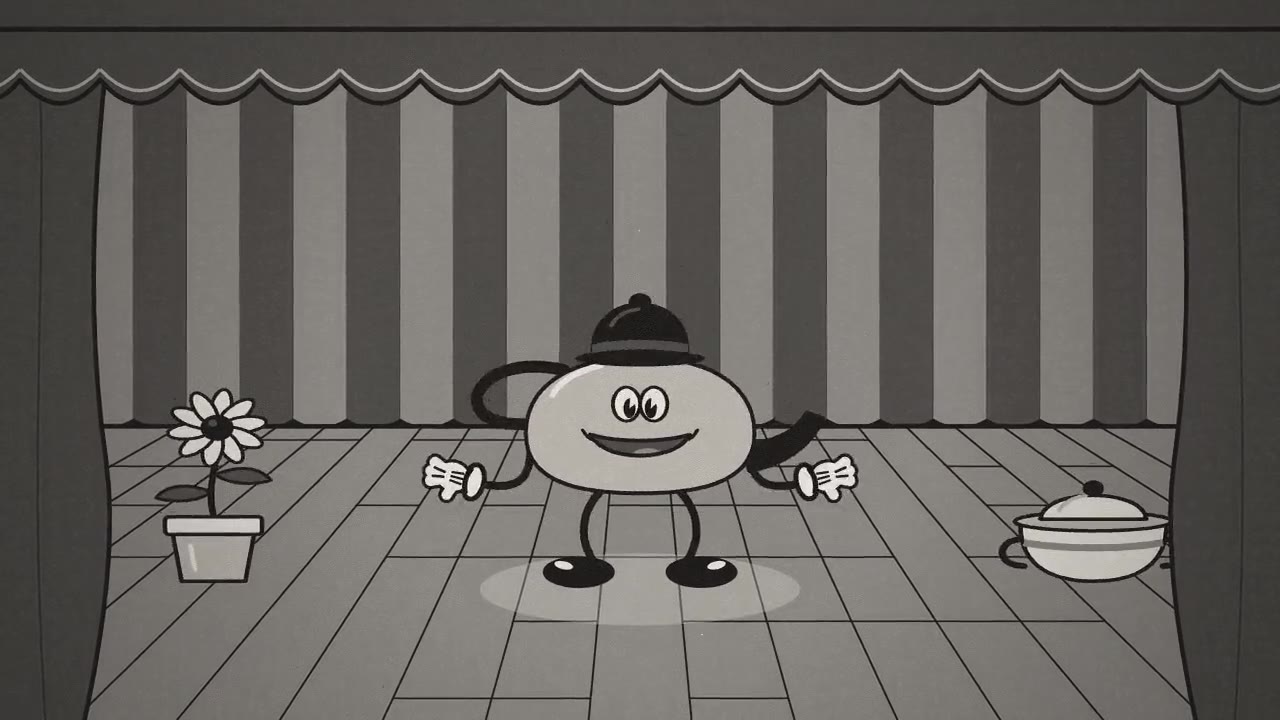
A black-and-white 1930s cartoon: Tippy, an original teakettle with rubber-hose limbs, white gloves and pie-cut eyes, da…
More like this on the motion design inspiration board: Character animation inspiration