
Linocut Print
Seen from above a workbench, a heron is gouged into a lino block chip by chip, a brayer inks the uncut surface, a baren rubs the sheet until the image ghosts through, and the paper turns over like a page to land as a black and vermilion print, signed in pencil.
Written and rendered by AI CSS Animations Oct 18, 2026
- Type
- prompt
- Made with
- Claude Opus 5.5 in Claude Code
- Built in
- Canvas
- Topics
- Line art
About this style
Linocut is a relief print: the artist cuts away the surface of a linoleum block with V and U gouges, and only the uncut surface carries the ink. Artists took up the cheap, soft floor covering in the early 20th century, and Henri Matisse and Pablo Picasso both made linocuts. Blocks are inked with a rubber brayer and printed by hand with a baren or a spoon, or in a press, usually with one block or one reduction stage per color. Printmakers, illustrators and small brands value its bold shapes and visible gouge marks.
The prompt
Make a 10-second linocut film, seen from above the workbench: a heron is carved into a lino block, inked with a brayer, printed by hand and turned off the block as a bold two-color print.

<inputs>
Title: Heron at First Light. Edition: 7/24. Artist: T. Rasmund (fictional). Inks: black, over a vermilion sun printed earlier. Duration: 10s. If I don't give you something, use the default and don't ask.
</inputs>

<direction>
Palette: birch plywood bench #D8C29E with soft grain; lino #8A7660, with carved channels exposing a paler, fibrous #B9A07E; jute backing #A88C5E at the block's edges; ink black #151413 with a wet sheen; vermilion #E1452C; kozo paper #F2EBDC with long fibers; pencil #5F5B56; chalk #EDE6D6; tool wood #B07A45 and steel #9DA1A4.
Layout, top-down at 1:1: the block, 720×520, at x 200–920, y 250–770; the sheet, 800×600, waiting face down at x 960–1760, y 210–810, its back showing only a faint warm ghost of the sun printed on its front; the brayer comes in from above the top edge and the gouge from below the bottom left.
The image, carved mirrored on the block so that it prints facing right: a grey heron standing in shallow water, 420px tall, with a teardrop body, a folded wing carved in overlapping curved V-cuts for feathers, an S-curved neck, a dagger bill, a long crest plume, an eye ring cut as a white circle, and two long legs into the water, one slightly bent. Reeds rise beyond it: thin blades and two seed heads. The water is horizontal ripple lines cut with a V-gouge and broken around the legs; the sky is long horizontal U-gouge strokes that leave thin ridges standing, which print as fine black lines. On the paper, a vermilion sun disc 300px across sits behind the heron's head; where the black block is carved away over it, vermilion shows; where both are absent, paper.
Carving: the block starts with the mirrored drawing in chalk lines. About 220 cuts, each a channel along a predefined path, appear in order: the V-gouge outline of the heron and reeds first, then the feathers, the water lines and the long sky strokes. Each cut opens from start to end in 0.05–0.2s, with slightly ragged edges and tool chatter on its floor, and a curled lino chip flicks off its end and lands nearby on the bench. A gouge (a mushroom-shaped wooden handle with a steel V tip) travels along the cut being made.
Inking: a 300px rubber brayer (black roller, wooden handle) rolls three vertical passes over the block. Behind its contact line the uncut surface turns glossy black with a fine orange-peel stipple, while every carved channel stays lino-colored; ink builds slightly at the end of each pass.
Printing: the sheet slides left onto the block against a card registration corner. A 140px baren (bamboo-sheath wrap, twisted cord knot) rubs in overlapping circles along a zig-zag path, and behind it the image ghosts through the back of the thin paper in soft dark grey. Then the sheet turns over about its right edge like a page (a vertical hinge at x 960), foreshortening as it turns, showing its back until 90° and its front after, and lands face up at x 960–1760, right-reading.
The print: dense black with small seeded voids where pressure was light, a 1px fringe where ink squeezed out, paper fiber showing through the vermilion, and every gouge mark crisp. No greys in the print: only black, vermilion and paper.
Pencil, in "Caveat" 400, 30px: 7/24 at the left, the title centered and the artist at the right, on one baseline at y 852 under the print.
Motion is handwork at time-lapse speed: tools move on cubic-bezier(0.45, 0, 0.2, 1); the sheet lands with its shadow tightening from an 18px blur to 6px.
The real thing shows how it was made: gouge marks you can count, ink only on the uncut surface, a print that is the block's mirror image; the cheap version is a black-and-white posterize filter on a bird photo.
Banned: vector-smooth lines, gradients or greys in the print, a third ink, distressed fonts, photos, glow, motion blur, anything flashing more than 3 times per second.
</direction>

<structure>
0.0–0.4s: the bench: the block with its chalk drawing and the face-down sheet at right; the gouge slides in.
0.4–2.6s: the carving time-lapse: outline, feathers, water lines, then the long sky strokes; chips gather beside the block; the gouge leaves.
2.6–3.6s: the brayer rolls down, up and down over the block, inking it.
3.6–4.0s: the sheet slides left onto the block into the registration corner.
4.0–5.2s: the baren rubs the whole sheet and the heron ghosts through the paper.
5.2–5.9s: the sheet turns over about its right edge and lands face up beside the block: the print, right-reading.
5.9–6.3s: the print settles as its shadow tightens.
6.3–7.6s: the pencil writes the edition, the title and the artist, left to right.
7.6–10.0s: hold: the inked block and its print side by side.
For other durations, scale every timestamp proportionally.
</structure>

<build>
One self-contained index.html, CSS and JS inline. Google Fonts via <link> are fine; no other libraries (no three.js: this style is flat). Draw in Canvas 2D, repainting every frame from scratch, the backing store sized from CSS size × devicePixelRatio. Canvas won't fetch fonts itself: await document.fonts.load() for each face, then define window.seek. At load, build the bench, the block surface, each cut's channel mask and start time, the chips, the ink stipple, the paper, the ghost and the finished print into offscreen canvases. Each frame reveals the cuts started by t, ink behind the brayer's contact line, the ghost behind the baren's path (from a precomputed arrival-time map) and the page turn by slicing the sheet into 48 vertical strips foreshortened by the turn angle. The stage is 1920×1080 (16:9), scaled to fit the window. Design for 60fps. window.seek(t), t in seconds, must compute every visual from t alone: no CSS transitions or animations, no setTimeout or setInterval, no state carried between frames, and randomness only from a seeded PRNG. Anything cumulative is precomputed once at load at a fixed step or solved analytically from t, so any frame can be drawn directly. Without ?render in the URL, drive seek from requestAnimationFrame so it plays in a browser (loop after a 1s end hold); with ?render, don't start that loop.
</build>

<check>
Before showing me, step through one frame per second: screenshot each and look at it. Fix overlaps, clipped or cramped text, accidental edge collisions, and anything off-style or Banned. Check the block reads mirrored and the print right-reading, ink never appears in a carved channel or ahead of the brayer, the gouge marks survive at 1280×720, the heron reads as a heron (bill, S-neck, plume, legs), the print has no grey tones, and the pencil line sits clear of the print and the frame edge. Confirm seek(duration) and seek(duration + 1) match, so the final frame holds.
</check>
Ours, and free to use under CC0: copy it, change it, ship it. No credit needed.
Similar prompts
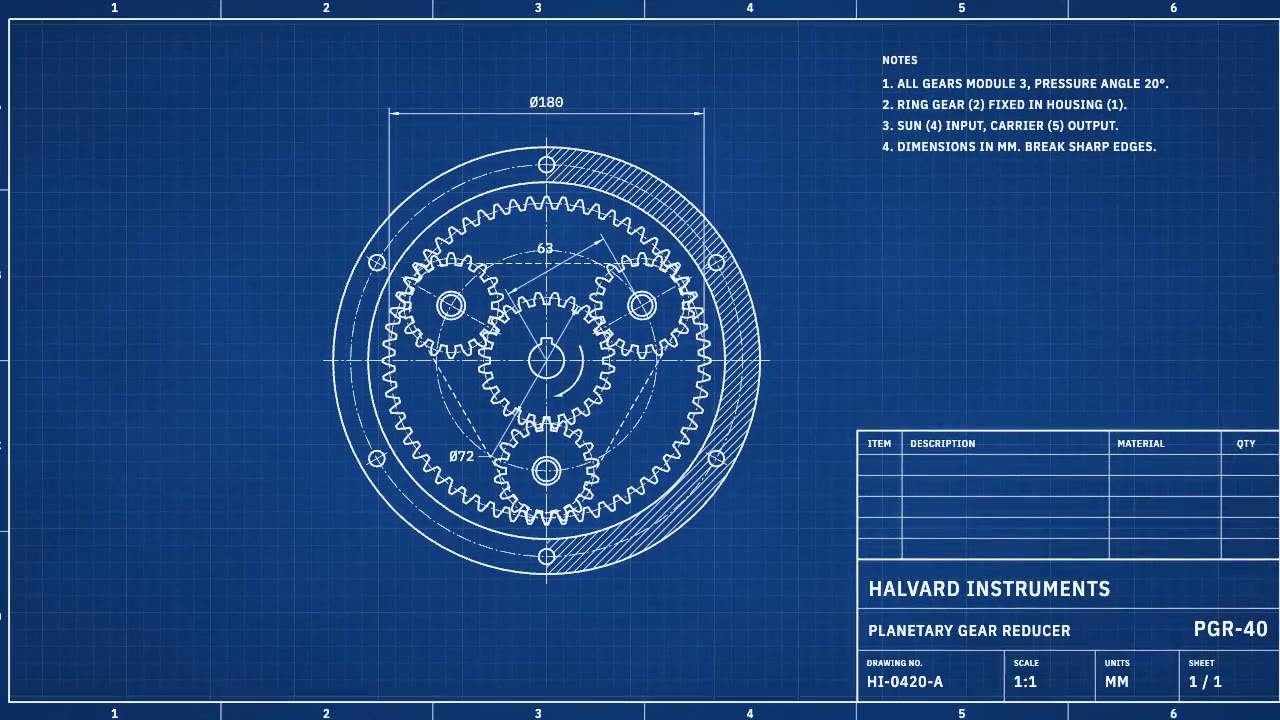
A cyanotype-blue engineering sheet that drafts itself: centerlines, compass-swept gears, hatching and dimension lines a…
A symmetrical Art Deco reveal in black and metallic gold: a sunburst fans open, stepped pinstripe frames draw from the…
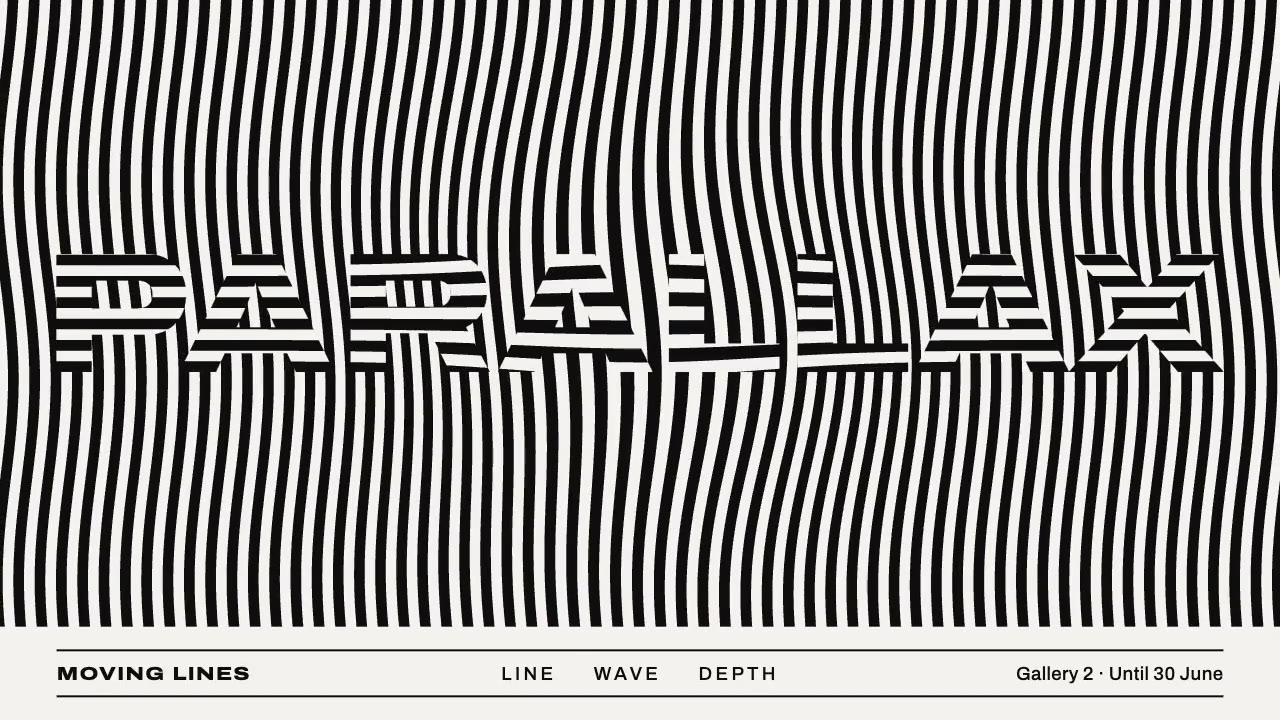
A black-and-white Op Art piece: crisp stripes swell into a bulging lens and slow waves, and the title exists only as a…
A quiet Japanese minimalist piece on generated washi paper: a single sumi ensō is brushed on with dry-brush texture, sm…
More like this on the motion design inspiration board: Line art animation inspiration